Category Archives: Bank vs Gold

Why Are Central Banks Turning to Gold in 2024?

Why Are Central Banks Turning to Gold in 2024?


In an era marked by rising inflation, geopolitical turmoil, and increasing uncertainty about fiat currencies, central banks are making significant moves to secure stability. One of the clearest indicators of this trend is the surge in gold purchases. But why is gold becoming such an attractive asset for central banks in 2024? Let’s explore the key drivers behind this strategic shift and what it means for you as an investor.


Central Banks Turning to Gold


Inflation has remained persistent in 2024, pushing central banks to seek reliable hedges. While fiat currencies lose purchasing power during inflationary periods, gold has consistently maintained its value. This year alone, inflation rates in Europe have hovered around 6.2%, weakening the euro and impacting household savings.

In response to these pressures, the European Central Bank (ECB) increased its gold reserves by 50 metric tons in the first half of 2024. This decision reflects a strategic pivot to mitigate the risk of holding devaluing euros. Gold offers a non-correlated, tangible asset that shields reserves from inflation’s corrosive effects.

For investors, the ECB’s move signals confidence in gold’s role as a hedge. If central banks are diversifying with gold, perhaps your portfolio should too.


Geopolitical Tensions Drive Safe-Haven Demand


Geopolitical instability has intensified in 2024, influencing economic policies and investment strategies. Conflicts in Eastern Europe and the Middle East have heightened market volatility, pushing central banks to adopt defensive strategies. Gold, historically viewed as a “safe-haven asset,” is once again in the spotlight.

In 2024, Turkey added 100 metric tons of gold to its reserves. The country’s central bank made this move amid concerns over the weakening Turkish lira and ongoing geopolitical challenges. By increasing gold holdings, Turkey is reducing its exposure to currency risk and protecting national wealth.

This trend isn’t limited to Turkey. Countries facing currency instability or political tension are increasingly turning to gold for stability. For individual investors, gold can serve the same purpose: a shield against uncertainty.


Fiat Currency Stability in Question


Fiat currencies are facing new challenges in 2024. The global economy’s reliance on the U.S. dollar is being questioned, and concerns over excessive government debt are rising. With these factors in play, confidence in paper currency is wavering.

China has been steadily reducing its reliance on the dollar by accumulating gold. In the first quarter of 2024, the People’s Bank of China added 60 metric tons of gold to its reserves. This move is part of a broader strategy to protect against potential dollar devaluation and diversify its assets.

China’s strategy highlights a key takeaway: gold remains independent of government or corporate defaults. It isn’t bound to monetary policies or national debts, making it a reliable store of value when fiat currencies falter.


How Does Central Banks Impact Your Investment Strategy?


If central banks are safeguarding their reserves with gold, shouldn’t your investment strategy reflect a similar approach? Whether you’re seeking to protect against inflation, hedge geopolitical risk, or diversify away from fiat currency exposure, gold offers unique advantages.


Don’t wait for uncertainty to impact your portfolio. Explore our range of gold coins, bars, and other precious metals designed to help you achieve stability. Start building a gold-backed strategy today.

Shop Gold Now.


A Gold IRA can be an excellent way to protect your retirement savings from inflation and economic turmoil. With potential legislative changes in 2024 making Gold IRAs even more attractive, there’s no better time to explore this option.

Learn how to diversify your retirement with gold and secure your future wealth. Our guide covers everything you need to know.

Get the Gold IRA Guide here.


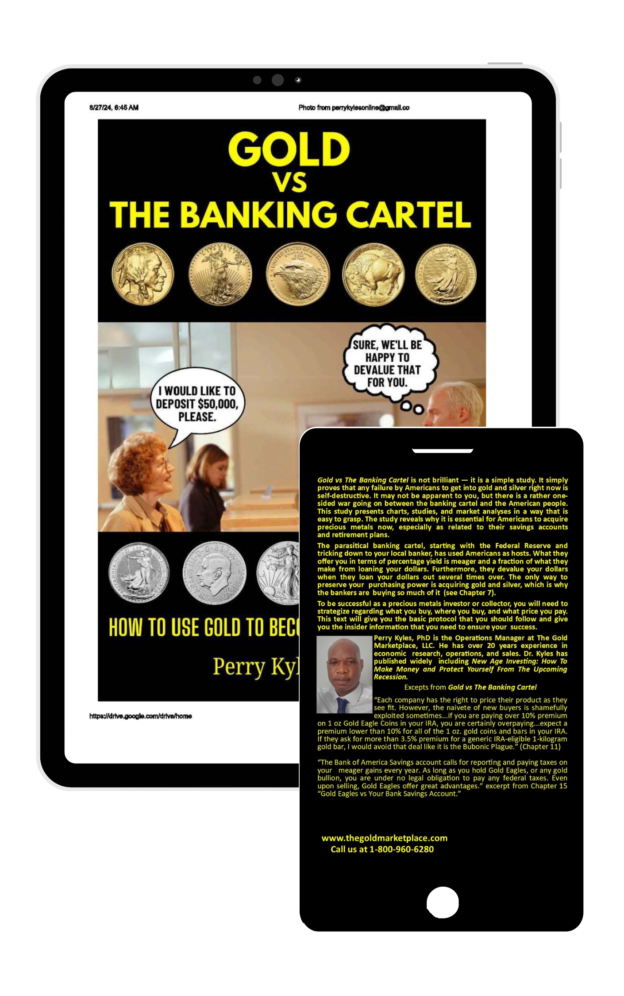
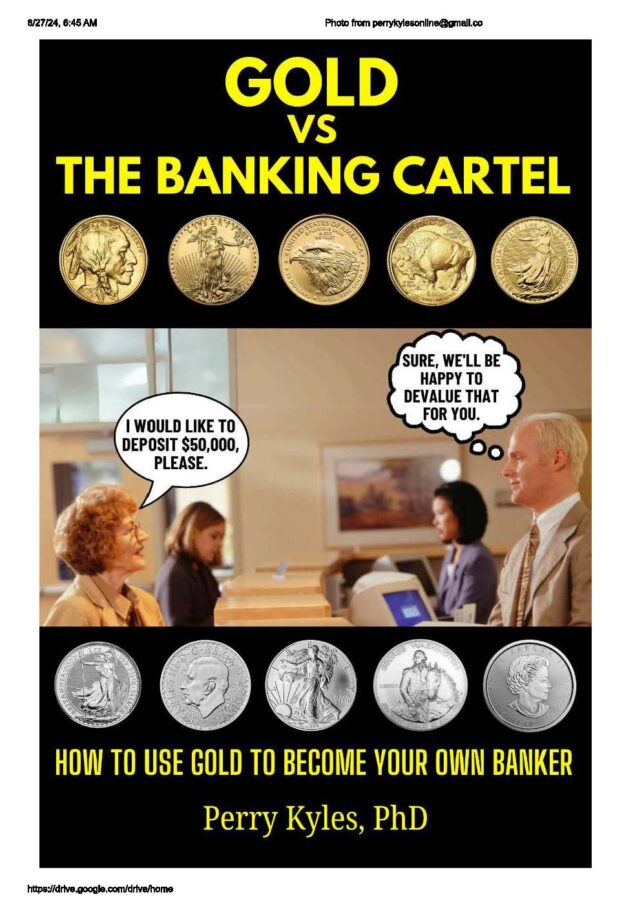
For a deeper understanding of why gold remains the superior form of savings and how banks manipulate fiat currency, check out Dr. Perry Kyles’ book, Gold vs. The Banking Cartel. This insightful read exposes the flaws in the current financial system and shows why gold is your best defense.

Get the Book here.


Central banks are leading the way in securing stability through gold. Their decisions offer valuable lessons for individual investors. As inflation persists, geopolitical tensions rise, and fiat currencies face scrutiny, gold stands out as a reliable asset for wealth protection in 2024 and beyond.

Make gold a cornerstone of your strategy today, and prepare for a future of financial security.


Why Are Central Banks Turning to Gold in 2024?

The Hidden Costs of Banking: Fees, Inflation, and Devaluation

The Hidden Costs of Banking: Fees, Inflation, and Devaluation


In an era where economic uncertainty has become the norm, relying solely on traditional banking for wealth protection can expose your finances to hidden costs that silently erode your wealth. Many individuals turn to banks out of habit, but banks often don’t provide the safety or value they advertise, especially when you consider the impact of fees, inflation, and currency devaluation. In contrast, gold has shown enduring stability, making it an attractive option for those seeking to preserve and grow their wealth. In this guide, we’ll reveal the hidden costs of banking, the protective potential of gold, and how you can take control of your wealth through the products and resources we offer at The Gold Marketplace, LLC.


1. The Costly Reality of Bank Fees


Let’s start with a well-known but frequently underestimated cost: banking fees. While fees can seem small on their own, they add up quickly. Here’s a breakdown of some common charges:


  • Monthly Maintenance Fees: Many banks charge monthly fees simply for holding your account, averaging around $10 to $15 a month in the U.S. For those with premium accounts, these can reach $25 or more. Over a year, that’s $120 to $300 in fees for a single account.


  • Overdraft Fees: An overdraft fee can cost around $35 per occurrence, a penalty for spending more than you have in your account. In 2022, U.S. consumers paid over $8 billion in overdraft fees alone.


  • ATM and International Fees: Using an out-of-network ATM can cost between $2 to $5 per transaction. International transactions often incur additional charges, making banking expensive for frequent travelers.


In comparison, gold incurs no monthly fees, no overdraft penalties, and no hidden charges, making it a straightforward asset to own.


2. Inflation and the Devaluation of Currency


Inflation is an insidious way that wealth in the bank loses value over time. The U.S. dollar, for example, has lost about 86% of its purchasing power since 1971, when the dollar went off the gold standard. What does this mean for the average saver? Simply put, inflation makes your money worth less every year. In the last decade, the average annual inflation rate in the U.S. was around 2.5%, with spikes as high as 9.1% in 2022.

When inflation outpaces the interest earned on savings accounts (typically around 0.05% to 0.6% annually), money saved in the bank actually loses value. In contrast, gold has shown long-term value stability. Between 2000 and 2023, gold’s value rose by approximately 600%, while the dollar’s buying power continued to decline.


3. How Gold Provides Stability Amid Inflation


Unlike currency, which is affected by national debt, inflation, and monetary policy, gold has an intrinsic value that holds across economies. Gold is universally valued and recognized, and its scarcity provides it with a stability that cash cannot offer. Gold has historically served as a hedge against economic uncertainty, political instability, and market downturns.

For example, during the 2008 financial crisis, the S&P 500 lost about 37% of its value, while gold gained around 5% that year. This trend repeated itself in 2020 when the COVID-19 pandemic caused stock markets to plummet. Gold reached new highs as investors flocked to safer assets. Owning gold allows individuals to protect their wealth from the volatility associated with traditional banking assets.


Ready to Get Started? Explore Our Gold Products


At The Gold Marketplace, LLC, we offer a range of high-quality gold products that provide stability and reliability for wealth protection. Whether you’re interested in gold coins, bars, or other precious metals, our inventory is designed to meet the needs of those looking to safeguard their wealth. Click here to view our collection and discover how you can begin to protect your assets with gold today.


The Hidden Costs of Banking: Fees, Inflation, and Devaluation


Secure Your Future with a Gold IRA


If you’re seeking a more structured, tax-advantaged approach to investing in gold, consider setting up a Gold IRA. A Gold IRA offers a way to protect retirement savings from inflation and economic downturns. With tax-deferred growth, you can maximize your investment while minimizing tax liabilities.

For more information on how to get started, check out our Gold IRA Guide. It talks you through the process of opening, managing, and benefiting from a Gold IRA.


The Hidden Costs of Banking: Fees, Inflation, and Devaluation


Dive Deeper with “Gold vs the Banking Cartel”


For an in-depth look at the limitations of traditional banking and the strategic benefits of gold, our book, Gold vs the Banking Cartel, delves into why the banking system’s practices can harm your savings. We explore the devaluation of currency, the monopolistic nature of banking, and how gold offers an alternative path for true financial independence. If you’re ready to challenge the status quo and learn more about securing your wealth, get your copy today.


The Hidden Costs of Banking: Fees, Inflation, and Devaluation


Final Thoughts: Take Charge of Your Wealth


When it comes to wealth protection, understanding the hidden costs of traditional banking can open up new perspectives on securing your future. While banks offer convenience, the benefits come with significant costs that can erode your financial well-being. Gold stands as a powerful, time-tested alternative that has consistently held value across centuries. Diversify your assets with gold to mitigate risk and secure your wealth in uncertain economic times.

Make the choice to protect your wealth—ditch the banks and start your journey with gold today.

Real Case Studies: How Banks Are Devaluing Your Money


In recent years, people have become increasingly aware that the money they hold in their bank accounts is losing value. This phenomenon is not just a perception—it is a reality shaped by the actions of central banks and financial institutions around the world. This blog post will explore real case studies demonstrating how banks are devaluing people’s money and what you can do to protect your wealth.


Case Study 1: The 2008 Financial Crisis and Quantitative Easing


During the 2008 financial crisis, the U.S. Federal Reserve implemented a policy known as Quantitative Easing (QE). This policy involved printing vast amounts of money to purchase government bonds and other financial assets. While the intention was to stabilize the economy, the side effect was a significant increase in the money supply.


Impact on the Average Saver:
As more money flowed into the economy, the value of each dollar decreased. This means that the purchasing power of people’s savings diminished over time. For example, if you had $10,000 in your bank account in 2008, its purchasing power today would be much lower due to the inflationary effects of QE. Everyday goods and services have become more expensive, but the value of savings has not kept pace.


Case Study 2: Negative Interest Rates in Europe


In the aftermath of the global financial crisis, several European countries introduced negative interest rates to stimulate their economies. In essence, this policy means that instead of earning interest on their deposits, savers had to pay the bank to hold their money.


Impact on Savers:
For individuals with significant savings, this policy was a shock. Not only were they losing money to inflation, but they were also being charged for keeping their savings in the bank. For instance, in countries like Denmark and Switzerland, savers saw their balances shrink year after year, regardless of whether they made withdrawals.


Case Study 3: The Indian Demonetization


In 2016, the Indian government announced a sudden demonetization, withdrawing 500 and 1,000 rupee notes from circulation. This decision aimed to combat corruption and black money. However, it also led to chaos, with people scrambling to exchange their old notes.


Impact on the Public:
Millions of people, especially those who did not have access to banking facilities, saw their life savings evaporate overnight. The value of their cash holdings plummeted as they were unable to convert them into the new currency. This drastic move highlighted the risks of relying solely on cash and banking systems that can change the rules without warning.


How Our Book Can Help


These case studies illustrate the precarious nature of storing wealth in traditional banking systems. Inflation, negative interest rates, and abrupt government policies can erode the value of your hard-earned money, often without warning.

Our book, “Gold vs the Banking Cartel,” delves deeper into these issues, providing a comprehensive guide on why gold remains a superior form of saving. Unlike fiat currencies, gold has intrinsic value and is not subject to the same inflationary pressures. By understanding the historical and economic contexts presented in the book, you can learn how to protect your wealth from the devaluation caused by banks and government policies.

Investing in gold is not just a strategy; it’s a safeguard against the unpredictable nature of financial systems. Our book offers practical advice on diversifying your portfolio, understanding market trends, and securing your financial future. Don’t let your money lose value in the bank—discover how gold can help preserve and even grow your wealth.

By reading “Gold vs the Banking Cartel,” you can arm yourself with the knowledge needed to make informed decisions and protect your financial future.


Real Case Studies: How Banks Are Devaluing Your MoneyReal Case Studies: How Banks Are Devaluing Your Money

Why Finance Bloggers and Podcasters Should Learn How Banks Are Devaluing Their Audience’s Money


As finance bloggers or podcasters, your goal is to help your audience build wealth and achieve financial freedom. However, there’s a hidden force working against them—the banking system. Often operating like a cartel, banks aren’t just holding your audience’s money; they are actively devaluing it through inflation and monopolistic control over monetary policy.

In this post, we’ll break down how banks erode the value of your hard-earned savings and why exposing this issue is crucial to make smarter financial decisions.


The Banking Cartel: Controlling Money for Profit


At the heart of the banking system is the central bank, which sets interest rates and controls the money supply. While most people think this helps stabilize the economy, it’s important to understand how this system works like a cartel. Banks can manipulate the flow of money through policies that benefit themselves but hurt average consumers.

For instance, when central banks print more money, it doesn’t create new wealth—it dilutes the value of money already in circulation. This inflation eats away at the purchasing power of your audience’s savings over time. A dollar today buys much less than it did a decade ago, and that’s not just due to natural market forces; it’s the direct result of how the banking system operates.


How Inflation Robs Your Audience


Inflation is more than just rising prices—it’s a mechanism the banking cartel uses to quietly devalue money. Many of your readers or listeners may have savings accounts, thinking they are securing their future. But the interest rates on these accounts are often less than 1%, while inflation can run between 3-4% annually.

This means that even as their bank accounts grow, their actual purchasing power is shrinking. What your audience might not realize is that banks profit from this arrangement. The more money they lend and the more they devalue currency, the greater their returns.

Consider the example of a savings account: If someone has $10,000 in the bank, earning 0.5% interest annually, they are making $50 per year. But if inflation is running at 3%, the real value of that $10,000 decreases by $300 over the same year. In reality, they’re losing $250 in purchasing power, even though the balance is technically growing.


Debt as a Tool for Control


Banks don’t just profit from devaluing money—they also benefit by keeping people in debt. Your audience may think taking out a loan or using a credit card helps them manage finances, but in reality, it locks them into a cycle of repayment that benefits the bank. While banks are lending out devaluing money, they’re collecting higher interest rates, fees, and charges from consumers.

Finance bloggers and podcasters’ audience members might find themselves struggling to keep up with these costs, unaware that the entire system is designed to keep them financially dependent. By educating them about how the banking system is structured, you can provide them with alternative solutions that truly benefit their financial future.


Empowering Your Audience: What They Can Do


So, how can personal finance bloggers and podcasters help their audience escape the grip of the banking cartel? One option is to introduce them to alternative investments that are not reliant on the banking system, such as gold.

Gold has historically served as a hedge against inflation and economic instability. Unlike fiat currency, which can be printed at will by central banks, gold retains its value over time. Encouraging your audience to explore diversifying their savings into assets like gold can give them a stronger financial foundation, free from the bank’s influence.


A Resource to Share with Your Audience


For those looking to dive deeper into this subject, the book Gold vs the Banking Cartel by Dr. Perry Kyles exposes the full extent of how banks control and devalue money. While this post provides an overview, the book offers detailed examples and strategies that can help your audience protect their wealth in a more comprehensive way.

By educating your readers and listeners on these topics, you’ll not only empower them to make better financial choices but also set yourself apart as a thought leader in the personal finance space.

Help your audience break free from the banking system’s control. Explore more insights in Dr. Perry Kyles’ Gold vs the Banking Cartel and equip your followers with actionable strategies to safeguard their wealth.


Why Finance Bloggers and Podcasters Should Learn How Banks Are Devaluing Their Audience’s MoneyWhy Finance Bloggers and Podcasters Should Learn How Banks Are Devaluing Their Audience’s Money

A Must-Read for Academia Professionals: Gold vs. The Banking Cartel


In today’s rapidly changing economy, it is vital to understand the forces that shape our financial future. Gold vs. The Banking Cartel, a compelling new book by Perry Kyles, PhD, presents a timely and critical message: safeguarding your wealth from economic instability requires diversifying your assets with gold and silver. This message is particularly relevant to academia professionals who often analyze the intersection of economics, history, and policy.


Understanding the Problem: The End of the Gold Standard and Its Consequences


In 1971, the United States abandoned the gold standard, which set the stage for unchecked government spending and debt accumulation. Since then, the national debt has grown exponentially, and if current fiscal policies continue, we may follow the path of hyperinflation seen in Ancient Rome and modern Zimbabwe.

Hyperinflation, as detailed in Dr. Kyles’ work, leads to the erosion of purchasing power, making everyday essentials more expensive while diminishing the value of money saved in traditional banks.

For professionals engaged in economic research and financial studies, this book provides an essential analysis of how global economies react to such financial instability. Countries with emerging economies are buying gold in preparation for a potential economic collapse, and Dr. Kyles argues that Americans should consider doing the same.


Exploring the Banking Cartel and Its Impact


One of the most eye-opening sections of Gold vs. The Banking Cartel is the exploration of the “banking cartel” — a powerful consortium of public and private banks that wield more influence than governments. This system, according to Dr. Kyles, exploits the American public by inflating the dollar through irresponsible money printing and manipulates economic conditions to benefit a select few.

In Part I of the book, titled “You Can’t Trust Your Bank,” readers are taken through a well-researched account of how this financial collusion between Wall Street, the Federal Reserve, and government entities has undermined the American economy. Chapter 3, in particular, offers a revealing case study on the contrast between the paltry returns on savings accounts and the profits banks earn by lending out depositors’ money.


Gold’s Role in the Economy


Academia professionals, especially those studying monetary policies, will find Part II, “Gold and The Economy,” to be a fascinating study of how gold has maintained its value through recessions and periods of high inflation.

Dr. Kyles illustrates how inflation, which has recently reached its highest point since the early 1980s, is eroding the purchasing power of the dollar. As you witness rising prices at gas stations and grocery stores, it becomes clear that inflation is not a temporary issue but a persistent threat.

The research presented in this section uncovers several vulnerabilities within the U.S. economy that suggest further depreciation of the dollar. For professionals seeking to understand these trends, the book provides a clear road map for navigating this challenging landscape by turning to gold as a hedge against inflation.


How to Protect Your Wealth with Gold


Whether it’s bullion, collectibles, or a self-directed Precious Metals IRA, Dr. Kyles guides readers through the options and helps them avoid common pitfalls.

Gold should form the foundation of your liquid assets, regardless of your financial status. This section offers practical strategies for investing in gold, including how to identify counterfeit coins and avoid scams. For anyone in academia seeking to secure their financial future, this section delivers invaluable insights.

Gold vs. The Banking Cartel is not just a book—it’s a wake-up call. For those in academia, it provides a well-researched, data-driven analysis of why gold remains a superior store of value in times of economic uncertainty. By reading this book, you will gain a thorough understanding of how gold functions in the global economy and how to position yourself for financial resilience.

As academia professionals who influence thought and policy, understanding these dynamics is crucial. Consider adding this insightful book to your library. A physical copy is available for $18.95, or you can opt for the audiobook at $8.95, or claim your FREE eBook here.

Prepare yourself for the future—begin your journey with Gold vs. The Banking Cartel today.


A Must-Read for Academia Professionals: Gold vs. The Banking CartelA Must-Read for Academia Professionals: Gold vs. The Banking Cartel

Why Small Business Owners Should Read Gold vs. The Banking Cartel


As small business owners, you’re familiar with the ups and downs of running a company—balancing costs, maintaining growth, and safeguarding profits. But one critical aspect of financial management is often overlooked: safeguarding your wealth from a volatile economy. Our new book, “Gold vs. The Banking Cartel”, written by Perry Kyles, PhD, sheds light on how small business owners can better protect their hard-earned money by diversifying their assets, particularly with gold.


Understanding the Economic Landscape


Small business owners are more exposed to market fluctuations than large corporations. Banks and financial institutions often hold significant power over interest rates, loan approvals, and currency values. But as “Gold vs. The Banking Cartel” points out, these banks operate more like a cartel than many realize. They work to maintain control over money supply, often inflating or devaluing the dollar to suit their agendas.

This book offers an eye-opening explanation of how this “cartel” operates and why small businesses, which depend on cash flow, need to understand the risks posed by the banking system.

Inflation eats away at the value of the money in your business bank account. While you may be focusing on improving margins, inflation could be quietly reducing your purchasing power. With the banking system controlling interest rates, inflation becomes a tool for devaluing money.

“Gold vs. The Banking Cartel” demonstrates how gold can act as a hedge against this type of inflation. Gold has historically maintained its value over time and isn’t subject to the whims of central banks or inflationary policies. By allocating a portion of your wealth to gold, you protect your business’s assets from the decreasing value of fiat currency.


Diversifying to Protect Your Wealth


The book emphasizes the importance of not putting all your financial eggs in one basket. While it’s easy to rely on your business earnings and your bank’s promises, you may be exposing yourself to unnecessary risk. When economies falter, businesses are often the first to feel the pinch.

Gold is a tangible asset that maintains its value even in turbulent times. By diversifying your investments into precious metals, you ensure that a portion of your wealth remains protected, regardless of how the stock market, currency values, or interest rates fluctuate.

One of the key lessons from “Gold vs. The Banking Cartel” is empowering small business owners to take control of their financial future. While banks want you to believe that they are the best option for saving and growing your wealth, the reality is that gold offers a more stable, long-term solution.

The book outlines practical steps for business owners to begin incorporating gold into their financial strategies, including how to purchase gold, store it securely, and incorporate it as part of a balanced financial portfolio.


Why This Matters for Small Businesses


By reading “Gold vs. The Banking Cartel”, small business owners will gain a deeper understanding of financial history and the role gold has played in shaping economies. This historical perspective helps you make informed decisions about your business’s future, knowing that the banking system isn’t the only (or best) player in town.

For small business owners, every financial decision counts. It’s not just about profits—it’s about safeguarding the value you create. Understanding the risks posed by banks and inflation is crucial to sustaining long-term growth and success. “Gold vs. The Banking Cartel” offers the knowledge and tools you need to make smarter financial decisions that protect your business in the long run.

Investing in gold can seem like a big step, but the principles laid out in “Gold vs. The Banking Cartel” will help you understand why it’s a necessary one. By educating yourself on the reality of the banking system and the potential of gold as a protective asset, you can fortify your business and future.

Take control of your wealth today. Discover how gold can shield your business from economic uncertainties and learn more by reading “Gold vs. The Banking Cartel”.

Why Small Business Owners Should Read Gold vs. The Banking CartelWhy Small Business Owners Should Read Gold vs. The Banking Cartel

Central Banks, Inflation, and the Allure of Gold


As central banks grapple with inflation, there is a powerful tool you can use to protect your wealth—gold.


Inflationary Pressures and Central Bank Interventions


Central banks, such as the U.S. Federal Reserve and the European Central Bank, play a crucial role in shaping monetary policy. One of their primary responsibilities is controlling inflation. To do this, they typically raise interest rates, making borrowing more expensive.

However, raising interest rates too aggressively can also have adverse consequences. Higher interest rates can increase the cost of borrowing for businesses and consumers, potentially hindering economic growth.

Additionally, rising interest rates can lead to a stronger currency, which can make exports less competitive and impact certain industries.

In response to these challenges, many central banks are turning to gold as a strategic asset, leveraging its unique properties to mitigate risks and diversify their portfolios.

Gold has long been considered a safe-haven asset, meaning that its value tends to appreciate during times of economic uncertainty or market turmoil. This makes it an attractive option for central banks seeking to diversify their foreign exchange reserves and protect their wealth.


Why Gold is a Powerful Hedge


In the midst of these uncertainties, gold stands out as a stable and reliable asset.

When central banks raise interest rates, market volatility often increases, and gold tends to perform well during times of uncertainty. As investors seek safer assets, the demand for gold rises, pushing its value higher.

Even when central banks lower interest rates to boost growth, gold remains valuable because of its ability to preserve purchasing power over the long term.

Whether you’re an experienced investor or just beginning, holding a portion of your assets in gold can provide stability and security, no matter how central banks adjust their policies.

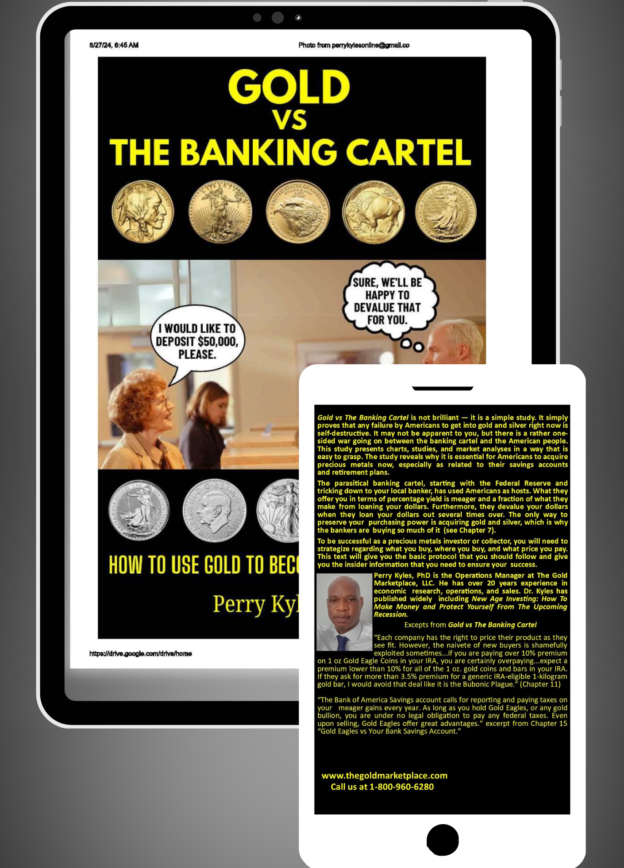
To truly understand how central banks influence the economy, we invite you to explore our book, Gold vs. The Banking Cartel: How to Use Gold to Become Your Own Banker. Written by Perry Kyles, PhD, this insightful book delves into the inner workings of the banking system and exposes how traditional banks devalue your money over time.

In a world where central bank policies are constantly shifting, becoming your own banker with gold is a strategy that can secure your financial future. Explore the transformative power of gold and learn how to build a portfolio that stands the test of time.

Visit our website for a wide range of gold products that can help you secure your financial future. We also provide a wealth of educational resources to guide you in making informed decisions about your investments.
 

Central Banks, Inflation, and the Allure of GoldCentral Banks, Inflation, and the Allure of Gold

You can’t trust your bank!


As financial systems become increasingly unstable, it’s becoming clearer that you can’t trust your bank with your hard-earned money. From hidden fees to inflation eroding your savings, traditional banking comes with risks that many overlook.


The Real Problem with Banks


Banks are part of a financial system that thrives on debt. When you deposit your money, the bank doesn’t just hold it for safekeeping. Instead, they lend it out, invest it, and take risks with it.

While you might feel secure knowing your money is in a bank, the reality is that banks are more focused on their profits than your financial well-being.

Moreover, central banks, the very institutions meant to stabilize economies, contribute to inflation. As they print more money, the value of your savings decreases. Over time, you might find that the purchasing power of your savings has diminished, even though the number in your account remains the same.


Gold: A Time-Tested Alternative


Gold, on the other hand, is not tied to any government or banking system. It has been a reliable store of value for centuries, surviving economic crashes, currency collapses, and banking crises.

When you invest in gold, you take control of your wealth, protecting it from the uncertainties of the financial system.

Unlike paper currency, which can be devalued or printed endlessly, gold is scarce. This scarcity gives it intrinsic value, making it a hedge against inflation. In times of economic turmoil, gold often retains its value—or even increases in worth—while currencies plummet.

By investing in gold, you can take charge of your financial future. Gold allows you to become your own banker, free from the limitations and risks of traditional financial institutions. It gives you independence and security in a world where the stability of banks is far from guaranteed.

Many people are realizing the power of holding physical gold as part of their investment strategy. Diversifying with precious metals not only safeguards your wealth but also provides peace of mind knowing that your savings aren’t tied to an unpredictable banking system.


A Deeper Dive: Gold vs. The Banking Cartel


If you’re ready to learn more about how you can’t trust your bank—and why gold is a superior form of savings—our new book, Gold vs. The Banking Cartel: How to Use Gold to Become Your Own Banker, is the perfect guide. Written by Perry Kyles, PhD, this insightful book exposes the banking system as a cartel and explains how you can protect your wealth by investing in gold.

Don’t let your savings lose value while sitting in a bank. Take control of your financial future with gold, and discover the freedom that comes with becoming your own banker.

Click here to get your FREE eBook copy of Gold vs. The Banking Cartel: How to Use Gold to Become Your Own Banker today!

You can't trust your bank!You can't trust your bank!

Bank Savings vs. Precious Metals: Why Investing in Gold is the Smarter Choice


In this post, we will compare Bank Savings vs. Precious Metals and show why gold could be a superior option for your financial future.


The Fragility of the Banking System


Banks are often considered safe and reliable. After all, your savings are typically protected by government-backed insurance programs like FDIC in the U.S. However, banking systems are not without their risks. Here are some reasons why relying solely on banks for your wealth could be problematic:

  • Low Interest Rates: Most traditional savings accounts offer minimal interest rates, barely keeping up with inflation. In today’s economy, this means your savings lose value over time, diminishing your purchasing power.
  • Economic Crises: Banking systems are vulnerable to economic downturns, such as the 2008 financial crisis. In the event of a major collapse, even insured funds may take time to recover, and in some extreme cases, they may be inaccessible for a period.
  • Inflation: Banks deal in fiat currency, which is subject to inflation. Over time, the value of paper money tends to decrease, and your savings might lose their purchasing power in the face of rising costs of living.


Why Precious Metals Are a Safer Bet


Investing in precious metals, particularly gold, offers a solid hedge against these uncertainties. Precious metals have historically been a reliable store of value, maintaining their purchasing power during periods of inflation and economic instability.

  • Gold Holds Intrinsic Value: Unlike fiat currencies, gold has intrinsic value. It cannot be created out of thin air and has been a trusted store of wealth for centuries. No matter the state of the economy, gold retains its worth globally.
  • Hedge Against Inflation: As inflation rises, the value of gold typically increases, meaning that your investment is more likely to retain or grow in value over time, protecting your purchasing power.
  • Protection in Economic Uncertainty: During financial crises, gold has historically outperformed other asset classes. When banks are struggling, gold continues to be a reliable store of value, providing peace of mind for investors.
  • Liquidity: Gold is a highly liquid asset. You can buy and sell gold quickly when needed, without the complexities or potential delays involved in accessing bank funds during times of economic crisis.


Why Invest in Gold through The Gold Marketplace, LLC?


At The Gold Marketplace, LLC, we believe in empowering investors with the knowledge and tools to protect their wealth in the long term. Unlike banks, which often prioritize their profits over your financial well-being, we focus on helping you safeguard your purchasing power.

Our expert team can guide you through the process, ensuring you make informed decisions that align with your financial strategy.

If you’re serious about protecting your wealth and understanding the deeper truths about Bank Savings vs. Precious Metals, we invite you to explore “Gold vs. The Banking Cartel”. This book will give you the insights you need to break free from the banks’ stranglehold on your finances and invest in something that truly holds value—gold.

Take the first step toward securing your financial future. Visit The Gold Marketplace, LLC today to learn more about investing in gold!
 

Bank Savings vs. Precious Metals: Why Investing in Gold is the Smarter Choice

How Banks Are Devaluing Your Money


This blog post will explore how banks are devaluing your money and why investing in gold might be a far better option for securing your financial future.


The Hidden Devaluation


Most of us keep our money in banks, trusting that it will be safe and perhaps even grow over time. However, the reality is far more complex. Banks are key players in a system that often works against the long-term value of your money. Here’s how:


1. Inflation: The Silent Thief

Inflation is the gradual increase in prices of goods and services over time. While it’s a natural part of any economy, it can have devastating effects on your savings. Banks often offer interest rates on savings accounts that are lower than the rate of inflation, meaning that the real value of your money decreases over time. For instance, if your bank offers a 1% interest rate while inflation is at 3%, you’re effectively losing 2% of your money’s purchasing power each year.


2. Fractional Reserve Banking: Money Creation and Devaluation

Fractional reserve banking is the practice by which banks keep only a fraction of their depositors’ money in reserve and lend out the rest. This system allows banks to create money out of thin air, leading to an increase in the money supply. When more money is in circulation without a corresponding increase in goods and services, the value of each dollar diminishes. This practice contributes to inflation and further devalues your savings.


3. Negative Interest Rates: Paying to Save?

In some economic environments, central banks may implement negative interest rates to stimulate spending. This means that instead of earning interest on your savings, you could be charged for keeping your money in the bank. While this hasn’t yet become widespread, the mere possibility highlights the fragility of the traditional banking system and its potential to erode your wealth.


Why Gold Is a Better Alternative


Given the challenges posed by the traditional banking system, it’s no wonder that many people are turning to alternative ways to protect their wealth. One of the most time-tested and reliable options is investing in gold. Here’s why:


1. Gold Is a Hedge Against Inflation

Unlike paper currency, gold has intrinsic value. Its worth isn’t tied to any government or central bank policy, making it a solid hedge against inflation. When the value of fiat currency drops, gold often rises, preserving your purchasing power over time.


2. Gold Cannot Be Devalued by Banks

Gold isn’t subject to the whims of the banking system. It can’t be created out of thin air like paper money, which means its value remains more stable. Historically, gold has been a store of value for thousands of years, weathering economic downturns and political instability.


3. Gold Provides Financial Security and Privacy

Unlike money held in a bank, gold provides a level of financial security and privacy that is unmatched. It’s a tangible asset that you can hold in your hand, immune to bank failures, government freezes, and currency devaluation. This makes it an excellent choice for those looking to diversify their assets and protect their wealth.


Take Control of Your Financial Future


The banking system, while essential to our modern economy, comes with devaluing your money. Inflation, fractional reserve banking, and negative interest rates all contribute to the devaluation of your money. In contrast, gold offers a stable, time-tested way to protect your wealth against these forces.

By investing in gold, you’re not just buying a precious metal; you’re investing in financial security, stability, and peace of mind. As more people wake up to the realities of our financial system, gold continues to prove its worth as the ultimate store of value.

Ready to protect your wealth? Consider adding gold to your investment portfolio today and secure your financial future against the unpredictable tides of the banking system.


Discover More: Gold vs. The Banking Cartel


If you want to dive deeper into why gold is the superior form of saving, we highly recommend our book, “Gold vs. The Banking Cartel” by Perry Kyles, PhD. This eye-opening read exposes the banking system as a cartel designed to control and diminish your wealth, while revealing how gold can help you break free from this cycle.


How Banks Are Devaluing Your Money


Whether you prefer a physical copy to hold in your hands, an audiobook to listen to on the go, or an ebook for instant access, “Gold vs. The Banking Cartel” is available in all formats. Equip yourself with the knowledge to safeguard your financial future—grab your copy today and start your journey towards true financial independence!


How Banks Are Devaluing Your Money