Tag Archives: financial advice

Don’t Be a Victim: Recession Proof Your Portfolio with Gold and Silver


America is in crisis. There’s still time to protect your wealth with gold and silver.

Check out this video for a deep dive.


Unveiling the Legacy of Gold and Silver: A Journey Through Time


From ancient civilizations that used these metals as currency to their status as symbols of wealth and power, gold and silver have been revered across cultures. The enduring value of these metals is rooted in their scarcity, beauty, and intrinsic worth.

For millennia, gold and silver have been used as a reliable store of value, a safe haven during economic turmoil, and a medium of exchange long before paper money existed.

Their historical significance is a testament to their lasting appeal, which continues to influence investment strategies today.


The Shifting Sands of the Global Economy


The way countries interact economically is undergoing a significant change. In the past, there was a strong emphasis on global trade, with countries acting like interconnected gears in a vast machine. Today, we are witnessing a shift towards a more regionalized economic order. This means countries are starting to focus more on trade with their close neighbors, forming smaller economic clusters.

This transformation is not without its challenges. One major consequence is increased volatility, or ups and downs, in the financial markets. The stock market, often seen as a reflection of overall economic health, has been experiencing significant fluctuations. Investors are uncertain about the future, leading to these changes in stock prices.

Another significant development is the weakening US dollar. For many years, the US dollar held the dominant position as the world’s primary currency. However, its value is now under pressure, impacting economies around the globe. This translates to a situation where the same amount of US dollars can buy less in other countries.

Perhaps the most pressing economic concern at present is inflation. This means the cost of everyday goods and services is rising at a faster pace than wages. Essentially, your money is buying less and less over time. This inflation, coupled with the overall economic uncertainty, has led some to draw comparisons to the period preceding the Great Depression, a time of immense economic hardship.

The global economic landscape is undoubtedly complex and challenging. However, by understanding these current trends, individuals and businesses can navigate this environment more effectively and make informed decisions regarding their finances.


Why Gold and Silver Are Wise Investments Today


In an era of economic uncertainty and rising inflation, gold and silver stand out as prudent investment choices. Unlike fiat currencies, which can lose value due to government policies and market fluctuations, gold and silver have intrinsic value that remains stable over time. This stability makes them an excellent hedge against inflation and a safeguard for your wealth.

As the global economy shifts, with the U.S. dollar facing potential devaluation, these metals provide a reliable form of security. Moreover, history has shown that during periods of economic downturn, gold and silver prices tend to rise, offering a refuge for investors. Diversifying your portfolio with these assets can protect your purchasing power and provide peace of mind in an increasingly volatile financial landscape.

The Gold Marketplace offers a secure and convenient platform to acquire high-quality gold and silver products. Our extensive selection caters to investors of all levels, from beginners to seasoned enthusiasts. We are committed to educating our clients about the benefits of precious metals ownership.

Don’t let your hard-earned savings be eroded by inflation. Take control of your financial future by investing in gold and silver. Join the growing number of individuals who are safeguarding their wealth through these timeless assets. Visit The Gold Marketplace today and explore the possibilities.

 

Don't Be a Victim: Recession Proof Your Portfolio with Gold and Silver

The Smart Investor’s Guide to Graded Bullion Coins


Graded bullion coins have a rich history that dates back centuries. Initially, these coins were minted primarily for trade and currency, their value directly tied to the precious metal they contained.

Check out this video for more insights.


The Historical Significance of Bullion Coins


Over time, bullion coins began to evolve, becoming more than just a medium of exchange. Gold coins became a store of value, inflation hedge, and safe haven.

In the late 20th century, the introduction of graded bullion coins marked a significant milestone in the coin industry. These coins, graded and certified by professional agencies, provided collectors and investors with a new level of assurance regarding the coin’s condition and authenticity.

The emergence of grading agencies such as the Numismatic Guarantee Corporation (NGC) and the Professional Coin Grading Service (PCGS) transformed bullion coins from mere commodities into collectible items with potential for significant appreciation in value.

Check out our $20 Gold St. Gaudens MS66 (1907-1932) Double Eagle – NGC-Graded.

The Smart Investor's Guide to Graded Bullion Coins

Click the image to learn more about this coin.


Understanding Graded Bullion Coins


Graded bullion coins are distinct from their ungraded counterparts in that they undergo a rigorous evaluation process conducted by professional grading agencies. The grade assigned to a coin reflects its condition, with higher grades indicating coins in near-perfect or perfect condition.

Graded coins often have labels like “First Strike” for early release. Coins may also feature the signature of a prominent figure, such as a coin designer or a political leader, further enhancing their appeal and value.

Graded bullion coins, particularly those with a grade of 69 or 70, are highly sought after by collectors and investors alike. Their pristine condition, coupled with the assurance of authenticity provided by the grading process, makes them a compelling addition to any portfolio.

Check out our $20 Gold Liberty MS65 (1850-1907) Double Eagle – NGC-Graded.

The Smart Investor's Guide to Graded Bullion Coins

Click the image to learn more about this coin.


Are Graded Bullion Coins a Sound Investment?


Investing in graded bullion coins offers several advantages, making them an attractive option for both novice and seasoned investors. One of the primary benefits is the potential for significant profit, especially when investing in coins with low mintage numbers.

Moreover, graded bullion coins often retain their value better than ungraded coins, thanks to their certified quality and authenticity. This is particularly true for coins that are acquired early in the year they were minted, as these are more likely to become rare over time.

However, it’s essential to approach this investment with caution. These coins often command high premiums, which can reduce potential profit if the price significantly exceeds the coin’s spot value. To maximize profit potential, investors should aim to pay no more than 20-50% above the gold spot price.

Check out our 2016-W 1/4 oz Gold Standing Liberty Centennial Coin NGC SP70.

The Smart Investor's Guide to Graded Bullion Coins

Click the image to learn more about this coin.


Take Action with The Gold Marketplace, LLC


At The Gold Marketplace, LLC, we understand the value and potential of investing in gold.

Visit our website to explore our range of products, or contact us directly at 800-960-6280 with any questions. Let The Gold Marketplace, LLC guide you on your journey to financial security through the power of precious metals.


Discover the Legacy and Investment Potential of U.S. Coinage


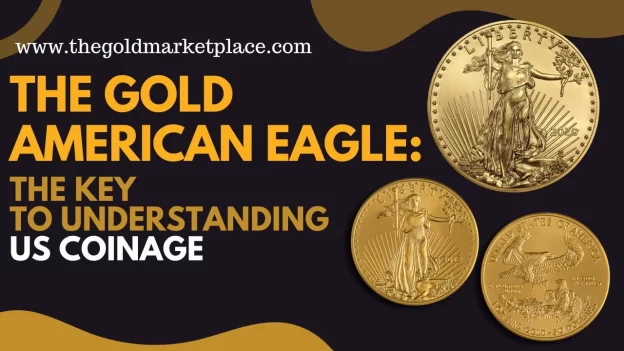
The Gold American Eagle is more than just being a part of the U.S. Coinage; it’s a symbol of American heritage and a cornerstone of modern investment portfolios. Its rich history, unique composition, and global trust make it a compelling choice for both collectors and investors. In this post, we will explore the evolution of Gold American Eagles, their significance in U.S. coinage, and why they are a must-have for any serious investor.

Check out our video to learn more.


A Historical Perspective


To truly appreciate the Gold American Eagle, one must delve into its historical roots. Consequently, the journey begins with the pre-1933 Eagles, coins minted in various denominations, each carrying a specific amount of gold.

Ranging from the $10 Eagle introduced in 1795 to the iconic $20 Double Eagle, these coins played a pivotal role in America’s monetary system. Importantly, the term “Eagle” referred to the coin’s weight, not its name, a concept that endured until the modern era.

Subsequently, the 20th century brought significant changes to U.S. coinage, particularly with the introduction of Executive Order 6102 in 1933. This order, leading to the confiscation of gold from U.S. citizens, marked a turning point in American history, fundamentally altering the nation’s relationship with gold.

However, it wasn’t until 1986 that the modern Gold American Eagle was introduced under President Ronald Reagan, thereby ushering in a new era of gold coinage.

Click here to purchase the Gold American Eagle.

A Legacy of Excellence


The Gold American Eagle stands as a testament to U.S. coinage history and a formidable player in the global market of gold investments.

Its design and composition draw from the rich legacy of earlier U.S. coins, such as the Liberty Head and Saint-Gaudens Double Eagle, and its introduction post-1971 marked a new era in American gold coinage.

When compared to other prominent gold coins like the South African Krugerrand and the Canadian Maple Leaf, the Gold American Eagle distinguishes itself with a blend of gold, silver, and copper, which not only adds to its durability but also enhances its status as U.S. legal tender.

These attributes, combined with the coin’s historical significance and numismatic value, have earned the Gold American Eagle a trusted place in both investment portfolios and collections worldwide.


Discover the Legacy and Investment Potential of U.S. Coinage

Click the image above to purchase this product.


The Role of Gold Eagles in Modern Investment Portfolios


Gold American Eagles are more than just collectible items; they are integral to modern investment strategies. In times of economic uncertainty, gold serves as a hedge against inflation and currency devaluation. The Gold Eagle’s liquidity and global recognition make it an ideal vehicle for wealth preservation.

For investors, the Gold Eagle offers the best of both worlds: the security of a tangible asset and the potential for long-term appreciation. Whether you’re a seasoned investor or a beginner, incorporating Gold Eagles into your portfolio can provide a reliable safeguard against market volatility.

Discover the Legacy and Investment Potential of U.S. Coinage

Click the image above to purchase this product.

If you’re new to investing in gold, the Gold American Eagle is an excellent starting point. Here are a few tips to help you get started:

  1. Research the Market: Understand the current gold market and how Gold Eagles are priced.
  2. Choose a Reputable Dealer: Ensure you buy from a trusted source, like The Gold Marketplace, LLC.
  3. Consider the Denomination: Decide which denomination suits your budget and investment goals.
  4. Understand the Coin’s Composition: Remember that modern Gold Eagles contain a mix of metals, which does not diminish their value.
  5. Think Long-Term: Gold is a long-term investment, so be prepared to hold onto your coins for several years to realize their full potential.

At The Gold Marketplace, LLC, we offer a wide range of high-quality tangible precious metals, including gold, silver, and platinum. Our mission is to provide our clients with the knowledge and tools they need to make informed investment decisions. If you have questions about investing in physical precious metals, contact us at info@thegoldmarketplace.com or call us at 800-960-6280. We’re here to help you navigate the world of precious metals with confidence.


How Much Do Banks Really Make From Loaning Your Money?


In today’s financial landscape, Americans place an extraordinary amount of trust in banks, often without understanding how these institutions profit off their hard-earned money. This post, inspired by the video “How Much Do Banks Make From Loaning Your Money?! Wells Fargo and The TRUE Yield On Your Money,” explores how the banking system, particularly Wells Fargo, generates significant profits from customer deposits while offering minimal returns. We’ll also discuss how gold and silver can be used as a hedge against inflation and unethical banking practices.


Traditional Banking vs. The Fractional Reserve System: Is the Current System Fair?


When most people think of banks, they imagine a secure place to store their money, with the promise of earning interest over time. However, the reality of modern banking, particularly under the Fractional Reserve System, is far more complex—and arguably, unfair.

Under the Fractional Reserve System, banks are required to hold only a small fraction of their deposit liabilities in reserve, meaning they can lend out the majority of customer deposits. For example, if you deposit $50,000 into a savings account at Wells Fargo, the bank can lend out almost all of that money to other borrowers. The kicker? While Wells Fargo may only pay you 0.25% interest on your deposit, it can charge borrowers anywhere from 6% to 18% interest on loans made with your money.

This discrepancy between what banks pay in interest and what they earn through lending creates a significant profit margin for the banks—a profit margin that ultimately comes at your expense. As the money is loaned out and re-deposited across the banking system, it multiplies, inflating the money supply and contributing to the devaluation of your savings through inflation.


Are Banks Making Too Much Money Off You?


The video highlights a critical point: while banks like Wells Fargo make billions in net interest income, the average depositor sees only a fraction of that in return. In the 2022 fiscal year alone, Wells Fargo’s net interest income was a staggering $44.95 billion. Meanwhile, a typical savings account holder with $50,000 in the bank would have earned just $125.16 in interest.

Wells Fargo, one of the largest banks in the United States, has a troubled history of unethical practices. The bank has paid over $9 billion in fines and settlements for creating fake accounts, illegal fees, and discriminatory practices.

Wells Fargo’s unethical practices damaged consumer trust and finances, yet the bank continues to profit despite hefty fines.

This vast disparity raises the question: are banks making too much money off you? The answer appears to be yes, especially with added fees, banks significantly profit while offering minimal returns to customers, undermining trust and loyalty.


Free Yourself From the Banking Cartel


By understanding how the fractional reserve system works and how banks profit off your money, you can make more informed decisions about where to store your wealth.

One way to protect yourself is by diversifying your assets and considering investments in gold and silver. These tangible assets offer a hedge against inflation and provide a level of security that the traditional banking system cannot. As the banking system continues to show signs of instability, the time to take action is now.

Gold and silver have long been regarded as safe havens in times of economic uncertainty. Unlike fiat currency, which can be devalued by inflation, gold and silver tend to retain their value over time. By converting some of your savings into these precious metals, you can hedge against the inflationary pressures created by the fractional reserve banking system. Moreover, gold and silver are outside the banking system, providing an added layer of security for your wealth.


Hedging Against Inflation with Gold and Silver


For those ready to take the next step, consider exploring options for purchasing gold and silver. The current prices are highly favorable, making it an opportune time to invest in these precious metals.

Remember, the banking system’s greed and irresponsibility won’t change unless consumers take control of their financial future. Don’t wait for the next financial crisis—act now to protect your wealth.

Don’t let your hard-earned money lose value in the bank—take control of your financial future today. Visit www.thegoldmarketplace.com to explore our wide selection of gold products.

Act now—secure your wealth with gold before the next financial crisis hits.

How Much Do Banks Really Make From Loaning Your Money?

How Banks Destroy Your Savings: Lessons From The Great Depression

The Great Depression stands as a stark reminder of how financial systems can fail the very people they are meant to serve. The stock market crash during The Great Depression was not merely a result of economic downturns but a consequence of reckless practices by banks and financial institutions.

Check out this video to learn more.


The Historical Context


During The Great Depression, banks exploited the trust of hard-working Americans, recklessly lending out and investing far beyond their reserves. Consequently, this era of unchecked lending and market speculation culminated in the catastrophic collapse of the stock market, triggering widespread bank failures.

By 1932, a staggering 25% of workers were unemployed, and countless Americans lost their life savings as banks shuttered their doors. These events reveal the risks of blindly trusting a profit-driven banking system.

A prime example of fiat currency abuse is FDR’s Executive Order 6102, which mandated gold surrender. Essentially, this action constituted a forced seizure of wealth, severely eroding trust between the government and its citizens.

This historical precedent continues to cast a long shadow over today’s financial world. Recent banking crises have underscored the fragility of fiat currency and the underlying systems that support it. When governments intervene to bail out failing banks, they often resort to flooding the economy with newly created money.

This infusion of currency inevitably leads to inflation, diminishing the value of people’s hard-earned savings. These situations question the long-term viability of easily manipulated fiat currencies.


A Timeless Hedge


Investing in gold and silver is not just about acquiring assets; it is about safeguarding your financial future. Historically, gold has had an inverse relationship with the dollar, meaning it tends to increase in value when the dollar weakens. This makes it an excellent hedge against inflation and economic instability.

Furthermore, gold and silver offer a security net against economic downturns and inflation. Unlike paper assets, they retain value. Diversifying with precious metals can shield your wealth from erosion.

The Gold Marketplace offers competitive prices on a wide variety of gold and silver products, making it easier for individuals to build a robust and diversified investment portfolio. Click here to view our investment packages.


Protect Your Wealth with The Gold Marketplace


At The Gold Marketplace, LLC, we are committed to helping you secure your financial future through the power of precious metals.

Don’t wait for the next financial crisis to protect your savings. Take proactive steps now by investing in tangible assets that have stood the test of time.


How Banks Destroy Your Savings: Lessons From The Great Depression

The Cost of Corporate Greed: Exposing the Reality Behind Bank Bailouts


When we think of welfare, images of individuals receiving government assistance often come to mind. But there’s a more insidious form of welfare that rarely gets the attention it deserves—the cost of corporate greed, particularly the kind that props up failing banks.

Check out this video for a deeper dive on this topic.


Exposing the Myth


When the topic of welfare arises, our minds often drift towards images of individuals struggling to make ends meet. However, a less visible yet equally significant form of welfare exists: corporate bailouts. This phenomenon, particularly prevalent within the banking industry, has silently drained taxpayer dollars for decades.

In stark contrast to the stereotypical image of the “Welfare Queen,” the true beneficiaries of welfare often occupy the corner offices of major financial institutions. These corporations, despite their immense wealth and influence, have repeatedly sought and received taxpayer-funded lifelines to rescue them from the cost of corporate greed.

While the public discourse surrounding welfare primarily focuses on aiding the impoverished, a more comprehensive view reveals a different reality. Some of the most substantial welfare recipients are not individuals but powerful corporations.

When these financial behemoths find themselves on the brink of collapse due to mismanagement or reckless speculation, the government frequently intervenes with taxpayer funds to prevent their downfall.

This pattern is exemplified by the 1984 collapse of Continental Illinois, a banking giant that required a $14 billion government bailout due to imprudent lending practices. This event set a precedent for rescuing “too big to fail” financial institutions.


The “Too Big to Fail” Fallacy: A License for Reckless Behavior


The concept of “too big to fail” has become a convenient justification for these bailouts. The argument posits that allowing such institutions to collapse would trigger a catastrophic economic downturn. However, this notion has inadvertently created a perverse incentive for excessive risk-taking.

Financial institutions, shielded by the implicit government guarantee, have felt emboldened to engage in increasingly risky behaviors, secure in the knowledge that taxpayers will ultimately bear the cost of corporate greed.

The 1998 collapse of the hedge fund Long-Term Capital Management further illustrates this trend. Despite suffering staggering losses due to high leverage and poor risk management, the fund received a $3.65 billion bailout orchestrated by the Federal Reserve. This event reinforced the message to the financial industry: take extraordinary risks, as the government will provide a safety net.

These examples underscore a disturbing reality: the banking industry has enjoyed a form of corporate welfare that far eclipses traditional welfare programs. It is imperative to expose this hidden drain on taxpayer resources and to question the rationale behind bailing out institutions that have proven capable of immense self-destruction.


The Taxpayer Burden: Who Really Pays the Price?


While these bailouts may save the banks, they do so at an enormous cost to the taxpayer. The 2008 financial crisis is a prime example. As the crisis unfolded, the U.S. government stepped in with an unprecedented $182 billion bailout for AIG, a major player in the crisis due to its involvement in insuring risky mortgage-backed securities. The Troubled Asset Relief Program (TARP) alone provided $700 billion to struggling banks and insurance companies.

However, the real cost to American taxpayers was far higher. Reports suggest that, between 2007 and 2009, the U.S. government may have provided as much as $7.7 trillion to the banking sector. The broader impact of the financial crisis, including lost jobs, foreclosed homes, and depleted retirement savings, was estimated by Yahoo Finance to have cost Americans around $12.8 trillion.

This raises a critical question: why should taxpayers foot the bill for the mistakes of wealthy bankers? The system seems inherently unfair when ordinary people are left to suffer the consequences of economic downturns while those responsible for the crisis receive billions in government aid. It’s a stark reminder that the real welfare recipients are often those who need it the least.


Taking Control of Your Financial Future


In light of this, it’s clear that individuals need to take control of their financial futures. History has shown that relying on the government or the financial system can be risky. One way to protect yourself is by investing in tangible assets like gold and silver, which have historically maintained their value in times of economic uncertainty.

Gold and silver have long been recognized as valuable assets, with a history that stretches back thousands of years. These precious metals have been used as currency, a store of value, and a symbol of wealth and power.

At The Gold Marketplace, LLC, we offer a wide variety of top-tier products, including coins, bars, and jewelry, all made from the finest precious metals. Our products are not only a means of wealth preservation but also a tangible investment that you can hold in your hands.


The Cost of Corporate Greed: Exposing the Reality Behind Bank Bailouts

Gold and Silver Buying Strategies for Beginners

Whether you’re new to the world of precious metals or looking to refine your approach, these gold and silver buying strategies will help you navigate the essentials of building a diversified portfolio that aligns with your financial goals. Investing in precious metals like gold and silver can be a powerful strategy for preserving and growing wealth.

Check out this video for more insights.


Understanding the Rich History of Precious Metals


The journey of gold and silver as commodities of value stretches back thousands of years, making them some of the oldest forms of money known to mankind. Civilizations across continents have revered these metals not only for their beauty but also for their resilience and intrinsic value.

Gold, for instance, has been used as a symbol of wealth, power, and stability for millennia. Ancient Egyptians adorned their tombs with gold, while the Romans minted coins to facilitate trade.

Silver, too, has a storied past, often serving as the standard of currency in various economies. The historical importance of these metals is one of the reasons they continue to hold significant value in today’s global economy.


How Much Should You Invest in Precious Metals?


A key question many investors face is how much of their assets should be allocated to precious metals. A commonly recommended range is 20-40% of your liquid assets.

  • Risk Tolerance: Are you comfortable with some volatility, or do you prioritize stability? Precious metals offer a hedge against inflation but can fluctuate in price.
  • Investment Goals: Are you aiming for long-term wealth preservation or short-term gains? Silver offers higher growth potential, while gold provides stability.
  • Overall Portfolio Mix: How do precious metals fit alongside your existing investments in stocks, bonds, and real estate?

For instance, if you have $10,000 in liquid assets, investing 20-40% would mean allocating $2,000 to $4,000 to precious metals. If your assets total $1 million, this range increases to $200,000 to $400,000.

The rationale behind this allocation is that precious metals offer a unique set of benefits—they act as a hedge against inflation, provide protection from banking system risks, and are highly liquid across the globe.


Building a Diversified Precious Metals Portfolio


Diversification is key to managing risk and maximizing returns. When building your precious metals portfolio, consider a mix of gold, silver, and potentially platinum, depending on your investment level.

For smaller investments (up to $10,000), focus on gold and silver bullion. Bullion coins and bars are the closest you can get to the spot price of metals and offer excellent liquidity. For example, allocating 90% to gold and 10% to silver can give you a balanced exposure. Click here to view our Gold and Silver Bullion Package.

Gold and Silver Buying Strategies for Beginners

For larger investments (over $20,000), consider a mix of bullion and collectible coins. A suggested composition might be 40% gold bullion, 40% gold collectibles, and 20% in silver or platinum. Collectible coins can offer greater profit potential than bullion, especially if they are pre-1933 coins with high grades, which tend to become rarer over time. Click here to view our Starter Gold and Silver Package.

Gold and Silver Buying Strategies for Beginners


What Products Should You Buy?


When deciding what products to buy, consider factors like premiums, liquidity, and divisibility.

  • Bullion Coins: Offer the best balance of liquidity and value. Coins like the Austrian Philharmonic or American Gold Eagle are widely recognized and easy to sell.
  • Bullion Bars: Usually have lower premiums, especially in larger sizes, but may be harder to liquidate in small quantities.
  • Collectible Coins: Can be a profitable investment if chosen wisely, but they require more research and understanding of the market.

For beginners, sticking to well-known bullion coins and smaller bars can be a safer starting point in gold and silver buying strategies.


Bullion vs. Collectible Coins


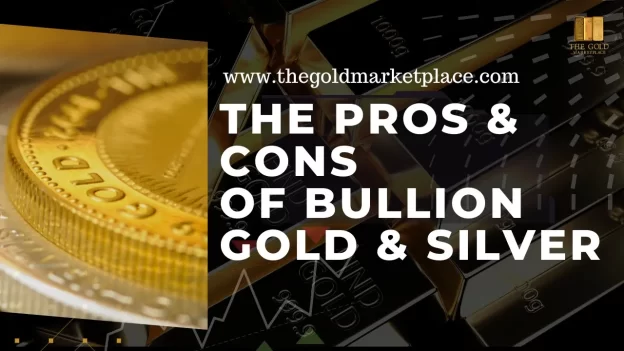
When choosing between bullion and collectible coins, it’s important to understand the pros and cons of each.

Bullion Coins and Bars:

  • Pros: Lower premiums, high liquidity, close to spot price.
  • Cons: Limited potential for significant price appreciation beyond the metal’s market value.

Collectible Coins:

  • Pros: Greater potential for appreciation, less vulnerable to spot price volatility, rarity adds value.
  • Cons: Higher premiums, requires knowledge to avoid overpaying.

For example, a modern bullion coin like a Gold Eagle is straightforward to buy and sell, but a pre-1933 Double Eagle coin with a high grade can offer more upside, as it becomes rarer and more valuable over time.


Where to Buy Gold and Silver


Choosing the right place to buy your precious metals is crucial. You can opt for online dealers like The Gold Marketplace, LLC.

At The Gold Marketplace, LLC, we are dedicated to helping you navigate the world of gold and silver buying strategies. Whether you are new to investing or a seasoned investor, our comprehensive range of gold, silver, and platinum products will meet your needs.

Our commitment to education sets us apart—we offer a wealth of resources to help you make informed decisions about your investments. From detailed product descriptions to expert advice on portfolio structuring, we provide all the tools you need to secure your financial future.

Don’t wait until it’s too late—start protecting your wealth today by exploring our offerings at www.thegoldmarketplace.com. Your future self will thank you.


Japan’s Stock Market Crash: A Global Wake-Up Call

The recent downturn in Japan’s stock market has sent shockwaves across the globe, highlighting the interconnectedness of modern financial systems.

Check out this video for more insights.


The Domino Effect: A Fragile Global Economy


What started as a localized event quickly escalated into a global concern, particularly affecting the U.S. economy.

The recent collapse of Japan’s stock market is a prime example of how a financial crisis in one region can ripple across the globe. Japan, one of the world’s largest economies, saw its major stock indexes like the TOPIX and Nikkei plummet by significant margins, with the TOPIX experiencing its largest three-day drop in history.

The cause? A combination of a stronger yen, which eroded the competitiveness of Japanese exporters, and a broader decline in investor confidence due to fears of a global recession.

As Japan’s stock market tumbled, U.S. markets were not immune. The sell-off in Japan led to a decline in U.S. equities as well, as investors grew wary of the global economic outlook. This interconnectedness demonstrates how financial markets are deeply linked, and how a crisis in one major economy can lead to a global downturn.


Analyzing the Signs of a Potential Recession


The signs of a potential recession are becoming increasingly evident. In the U.S., factory production is declining, and investor sentiment is wavering, as seen in the stock market’s recent performance. These factors, combined with Japan’s market downturn, are fueling fears of a global recession.

  • Gross Domestic Product (GDP) growth: A sustained decline in GDP can signal a recession.
  • Unemployment rate: A rising unemployment rate is often a precursor to a recession.
  • Consumer confidence: Decreasing consumer confidence can weaken economic activity.
  • Corporate earnings: Falling corporate profits can indicate economic challenges.


Diversification Strategies


Volatility in the markets can be unsettling, but having a robust risk management strategy can help safeguard your investments. When markets are unstable, as they are in the wake of Japan’s stock market crash, investors often shift from riskier assets to more stable ones. This is where gold shines, offering a less volatile option that has historically preserved value even when other markets have faltered.

Historically, gold has proven to be a reliable store of value during economic downturns. Its price tends to rise when other asset classes, such as stocks and bonds, decline.

Diversifying your investment portfolio with gold can be a prudent strategy. By allocating a portion of your assets to gold, you can mitigate risks and enhance your portfolio’s overall resilience.

Visit The Gold Marketplace LLC today to explore high-quality gold products and start securing your wealth against economic uncertainties.


A Legacy of Stability: A Look at Precious Metals Throughout History

At The Gold Marketplace, our business philosophy is grounded in integrity, education, and service. We are committed to providing our clients with the best experience possible as they navigate the world of precious metals. Our approach is centered on educating clients about the importance of acquiring and holding precious metals, ensuring they receive exactly what they pay for, and serving as a reliable resource during these uncertain economic times.

Check out our video for more insights.


Why Invest in Precious Metals?


Investing in precious metals like gold and silver powerfully protects you from economic instability. Precious metals have a long history of preserving wealth, especially during times of inflation, stock market volatility, and real estate downturns.

Unlike many other assets, gold and silver retain their value and avoid the risks associated with paper currencies or digital assets. For these reasons, we recommend allocating at least 20% of your liquid assets to physical gold and silver.

Inflation erodes the purchasing power of your money, and recent years have seen a significant increase in this problem. The Gold Marketplace recognizes that inflation steadily diminishes the wealth of American families by reducing the dollar’s value.

Protecting yourself from inflation’s devastating effects requires investing in precious metals. Gold and silver not only maintain their value but often increase in worth when other investments decline, making them essential for a diversified portfolio.


Exploring Investment Options in Precious Metals


You can invest in precious metals through various methods, each with its own advantages and disadvantages. Options include physical metals like bullion and collectible coins, or more complex investments like IRAs, ETFs, and mining stocks. While each approach has its merits, we strongly recommend owning physical gold and silver.

Physical metals offer tangible, discreet assets, providing peace of mind through real ownership. In contrast, other investment methods, such as ETFs, often involve leverage and deny you physical possession of the metals, which could prove problematic during financial crises.

The Gold Marketplace believes everyone should own some physical gold or silver. These metals have reliably stored value for millennia and continue to offer unparalleled security in today’s volatile economy. Physical ownership grants you immediate access to your wealth, independent of financial institutions.

Moreover, unlike paper currencies, gold and silver avoid the risks of historical value loss when not backed by tangible assets.


A Commitment to Integrity and Value


The Gold Marketplace is dedicated to helping our clients safeguard their wealth through informed investments in precious metals.

We offer a variety of high-quality products and services designed to meet the needs of every investor. As we face an uncertain economic future, investing in gold and silver is a prudent step towards financial security.

We invite you to explore our offerings and join us in our mission to protect and grow your wealth. Visit us at www.thegoldmarketplace.com or call us at 800-960-6280.

The Gold Marketplace

The Story and Philosophy Behind The Gold Marketplace

At The Gold Marketplace, we pride ourselves on offering a diverse selection of top-tier products, including coins, bars, jewelry, and more.

Check out this video to learn more.


Understanding the Product: What Sets Us Apart


People have highly prized precious metals, such as gold and silver, for their beauty, scarcity, and inherent worth for centuries. Historically, people used them as a medium of exchange, a store of wealth, and a symbol of prosperity.

Precious metals continue to hold an enduring appeal as investors favor them to protect wealth and mitigate economic risks. Even today, these metals retain their value, making them a dependable investment for those seeking financial security.

We carefully select our precious metals to serve both experienced investors and newcomers to the market. Unlike other sellers, we base our pricing system on fairness and openness.

The Gold Marketplace believe the spot price, a common industry standard, fails to accurately represent the true worth of physical gold and silver. Derivative markets primarily influence spot prices, disregarding the scarcity, purity, and other essential qualities of physical metals. Our pricing method considers these factors, ensuring our clients receive optimal value for their investment.


Take the Next Step with The Gold Marketplace, LLC


Are you ready to secure your financial future with precious metals? In addition, The Gold Marketplace is here to guide you on your journey. What sets us apart is our commitment to education and transparency.

To assist you in making informed investment decisions, we offer a wide range of resources, including courses, videos, and books. Whether you are looking to purchase gold, silver, or platinum for investment purposes or as a unique gift, we have the products and expertise to meet your needs.

Consequently, visit our website today to explore our offerings and discover how precious metals can enhance your wealth protection strategy. Ultimately, your journey to financial security begins with The Gold Marketplace.

The Gold Marketplace