Category Archives: Uncategorized
Introduction To Black History – Video 1, 3 Essential Black History Facts
Get your own Judgement Scene Papyrus:
https://blackandgold.us/product/kemetic-judgement-scene-papyrus-glow-in-the-dark-ancient-egypt/
Introduction to Black History Series — Video 1: Three Essential Facts
This video introduces three essential facts that form the foundation for understanding Black History within the broader context of Human History.
First, it establishes that the further back you go in human history, the more clearly you see Africa as the origin point of humanity. All modern humans emerged from Africa and migrated outward, making Black History central—not peripheral—to the human story.
Second, it explains the role of cosmology in the success and continuity of ancient Black civilizations. Cosmology shaped how people understood themselves, their environment, and their place in the universe. The preserved knowledge of the Dogon people of Mali, including their awareness of the star Sirius B, demonstrates the depth and sophistication of African cosmological traditions.
Third, it introduces the Nile Valley civilization of Kemet as a critical window into early human cultural development. Kemet provides insight into belief systems, spiritual practices, and intellectual traditions that existed long before recorded history.
This video serves as the foundation for the Introduction to Black History Series and prepares viewers for deeper exploration in future lessons.
Subscribe to the channel and visit blackandgold.us for additional educational materials, lectures, and resources.
GOLD, SANCTIONS, AND SOVEREIGNTY: Why Venezuela Became A Target
This conversation explores the historical and contemporary significance of gold, particularly in the context of Venezuela’s economic crisis.
It discusses how gold has been a central element in colonial ambitions and how its role has evolved in modern geopolitics, especially regarding sanctions and sovereignty. The discussion highlights the challenges Venezuela faces due to the immobilization of its gold reserves and the implications for its economy and sovereignty. #venezuela #gold #oil #trump #colonialism #drperrykyles #latinamerica #naturalresources
Top 5 Books to Deepen Your Understanding of Kemet
Kemet, known today as Ancient Egypt, remains one of the most fascinating civilizations in human history. From its monumental architecture to its spiritual philosophy, Kemet has influenced the world for thousands of years. Yet, beyond the pyramids and temples, there is a wealth of knowledge waiting to be explored.
For those who wish to dive deeper into the legacy of Kemet, books remain a powerful gateway. Below, we highlight five essential works that shed light on the culture, spirituality, and global influence of this great civilization.
Key note
Each book is available in the Kemet 101 shop, making it easy to begin your journey of discovery.
1. Egypt and Her Neighbours: A Reader Paperback

Understanding Kemet also means understanding its neighbors. This book provides valuable insight into the political, cultural, and economic relationships Kemet shared with surrounding civilizations such as Nubia, Mesopotamia, and the Mediterranean world.
For example, did you know that Nubia was not only a source of gold but also a powerful cultural partner? Archaeological evidence shows strong Nubian influences in Egyptian art and religion, proving that Kemet was not isolated but interconnected. Studies reveal that trade between Kemet and its neighbors contributed significantly to its prosperity, with Egypt importing cedar wood from Lebanon, copper from Sinai, and lapis lazuli from Afghanistan.
📖 Get your copy here and discover the networks that shaped Kemet’s rise.
2. Ancient Egypt: Light of the World

This classic work explores the symbolic and spiritual dimensions of Kemet. It delves into myths, religious practices, and cosmology, offering a deeper understanding of how the ancient Egyptians viewed the universe.
For instance, the concept of Ma’at—balance, truth, and order—was not only a spiritual principle but also the foundation of law and governance. Today, scholars compare Ma’at to modern ideas of social justice and ethical responsibility. By studying these teachings, readers can better appreciate how Kemetic thought continues to influence modern philosophy and religion.
📖 Start reading today to uncover the spiritual wisdom of Kemet.
3. Egyptian Ideas of the Future Life (Classic Book Series)

Death was not the end for the people of Kemet, it was a transition. This book explains ancient Egyptian beliefs about the afterlife, a subject that has fascinated people for centuries.
The Great Pyramid of Giza, for example, was not just a tomb but a monument to eternity. Recent studies show that nearly 70% of Egyptian tomb inscriptions referenced the journey of the soul to the afterlife. These texts reflect the deep concern for immortality and spiritual preparation. Such practices remind us that Kemet valued both physical and spiritual existence, teaching us about the human desire for meaning beyond life on Earth.
📖 Add this classic to your library and explore the mysteries of the afterlife.
4. The Book of the Dead: From the Tomb of Ani (Classic Book Series)

Perhaps the most famous of Egyptian texts, The Book of the Dead was a guide for the soul’s journey after death. This version, taken from the tomb of Ani, contains powerful illustrations and spells intended to secure safe passage in the afterlife.
Modern scholars compare this text to a “spiritual roadmap.” For example, the famous Weighing of the Heart scene illustrates the belief that one’s heart must be lighter than a feather to enter paradise. Studies in comparative religion show that this idea influenced later traditions, including aspects of Christian and Islamic teachings about judgment.
📖 Explore this masterpiece and experience one of the most important spiritual texts of all time.
5. The Kybalion

Although written much later, The Kybalion captures Hermetic principles rooted in Kemetic thought. This work discusses timeless spiritual laws such as mentalism, correspondence, and rhythm.
For example, the principle of correspondence, summed up in the phrase “As above, so below”, reflects a worldview that everything in the universe is connected. Today, psychologists and scientists alike discuss similar ideas when studying human consciousness, ecosystems, and even quantum physics. By reading The Kybalion, you can see how ancient wisdom continues to inform modern understanding.
📖 Discover the Hermetic teachings and connect with timeless knowledge.
Take the Next Step: Experience Kemet for Yourself
At Kemet 101, we offer a 12-day educational tour of Egypt led by Dr. Perry Kyles, a historian with decades of expertise. This tour is not just sightseeing—it is a guided journey into the heart of Kemet’s history, culture, and spirituality.
✈️ Join our next educational tour to Egypt and experience Kemet beyond the pages.
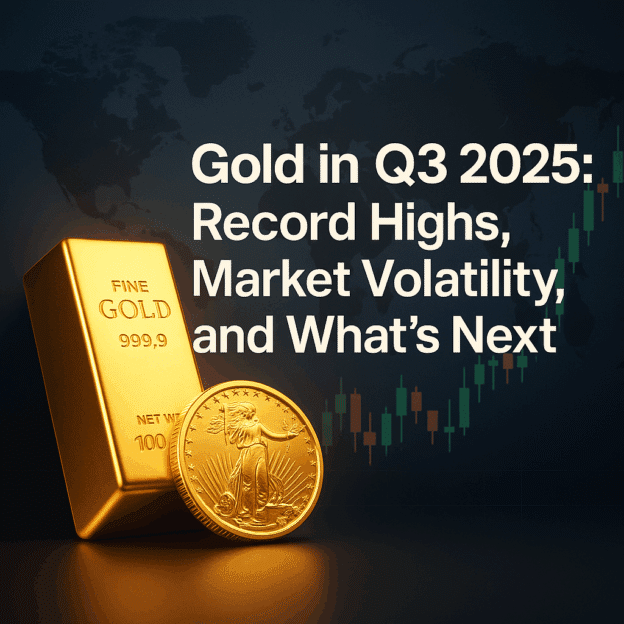
Gold in Q3 2025: Record Highs, Market Volatility, and What’s Next
Gold in Q3 2025 has been a landmark period for gold investors. Prices reached record highs, global events sparked volatility, and shifting demand patterns are reshaping the market landscape. Whether you’re a seasoned investor or exploring gold for the first time, the developments this quarter hold important lessons for protecting and growing your wealth.
Gold in Q3 2025 a Record High: $3,534 per Ounce
In August 2025, gold reached a new all-time high of $3,534 per ounce, representing a 32% year-to-date increase. This rally was fueled by geopolitical tensions, persistent inflation concerns, and a brief market shock over potential tariffs on imported gold bars.
For context, just five years ago—in 2020—gold averaged around $1,770/oz. This means investors who held gold during this period have seen nearly 100% growth in asset value, far outpacing inflation and many stock market indexes.
The tariff scare came after a U.S. Customs ruling hinted at imposing up to 39% tariffs on 1-kg and 100-oz bars from Switzerland. While this initially triggered a price spike, the markets stabilized after President Trump confirmed, “Gold will not be Tariffed!” Still, the episode highlighted how political uncertainty can quickly influence market movements.
Volatility Fueled by Fed Policy and Data Surprises
While gold’s overall trajectory has been upward, the quarter also saw sharp swings. Prices rose on expectations of Federal Reserve interest rate cuts and a softer U.S. dollar, reaching $3,357.65/oz. However, hotter-than-expected U.S. inflation data tempered hopes of aggressive cuts, leading to a 1.5% weekly drop in mid-August.
This pattern underscores gold’s role as both a safe haven and a market-sensitive asset. In times of economic uncertainty, investors often flock to gold, but monetary policy shifts can cause short-term turbulence.
Gold in Q3 2025 Demand Dynamics: Who’s Buying and Who’s Pulling Back?
Central banks remain the largest consistent buyers of gold, with over 900 tonnes purchased globally by mid-2025. China alone accounted for 120 tonnes, solidifying its position as one of the world’s top gold accumulators.
However, consumer jewelry demand in China and India—traditionally the largest gold markets—has weakened due to high prices and softer economic conditions. At the same time, gold-backed ETFs saw strong inflows, with 397 tonnes added in the first half of 2025, the highest since 2020. This shift suggests that institutional and strategic investors are increasingly favoring gold as a financial asset over its traditional role in luxury markets.
Forward Outlook: Consolidation with Potential for Breakout of Gold in Q3 2025
Looking ahead, analysts at Citi forecast gold will likely consolidate between $3,100 and $3,500 through the remainder of Q3, with possible dips below $3,000 if global growth improves. However, if geopolitical tensions escalate or economic conditions deteriorate, prices could rise another 10–15%, potentially surpassing $3,800/oz.
This dual scenario means now is a crucial moment to evaluate your portfolio. Gold’s current levels may present both defensive and opportunistic buying opportunities.
Key Technical Levels to Watch
From a technical perspective, analysts identify $3,200 as strong support. If gold holds above this level, it suggests market confidence and buying strength. On the upside, breaking through the $3,450–$3,500 resistance range could open a path toward $3,800 and beyond.
For active traders, these thresholds offer important entry and exit points. For long-term holders, they serve as reassurance that gold’s trend remains fundamentally strong.
Real-World Takeaway
If you had invested $10,000 in gold at the start of 2023, when prices averaged around $1,900, your holdings would be worth roughly $18,589 today at the Q3 2025 peak. That’s an 85% gain in less than three years—without the volatility of the stock market or the eroding effects of inflation on cash savings.
Secure Your Wealth with Physical Gold
The Gold Marketplace offers a wide range of gold bars, coins, and bullion products sourced from trusted mints and refineries. These are not just collectibles—they’re globally recognized stores of value you can hold in your hand.
→ Shop our Gold Products Today and start building a portfolio that’s ready for whatever the markets bring next.
Explore the Benefits of a Gold IRA
Did you know you can hold physical gold in your retirement account? A Gold IRA allows you to diversify your savings and protect against inflation while enjoying the same tax advantages as a traditional IRA.
We’ve prepared a comprehensive guide to walk you through the process step-by-step.
→ Download Your Free Gold IRA Guide and learn how to safeguard your retirement.
Learn the Truth: Gold vs The Banking Cartel
Packed with research, historical examples, and actionable strategies, this book will change the way you think about money forever.
→ Get Your Copy of Gold vs The Banking Cartel and take control of your financial future.
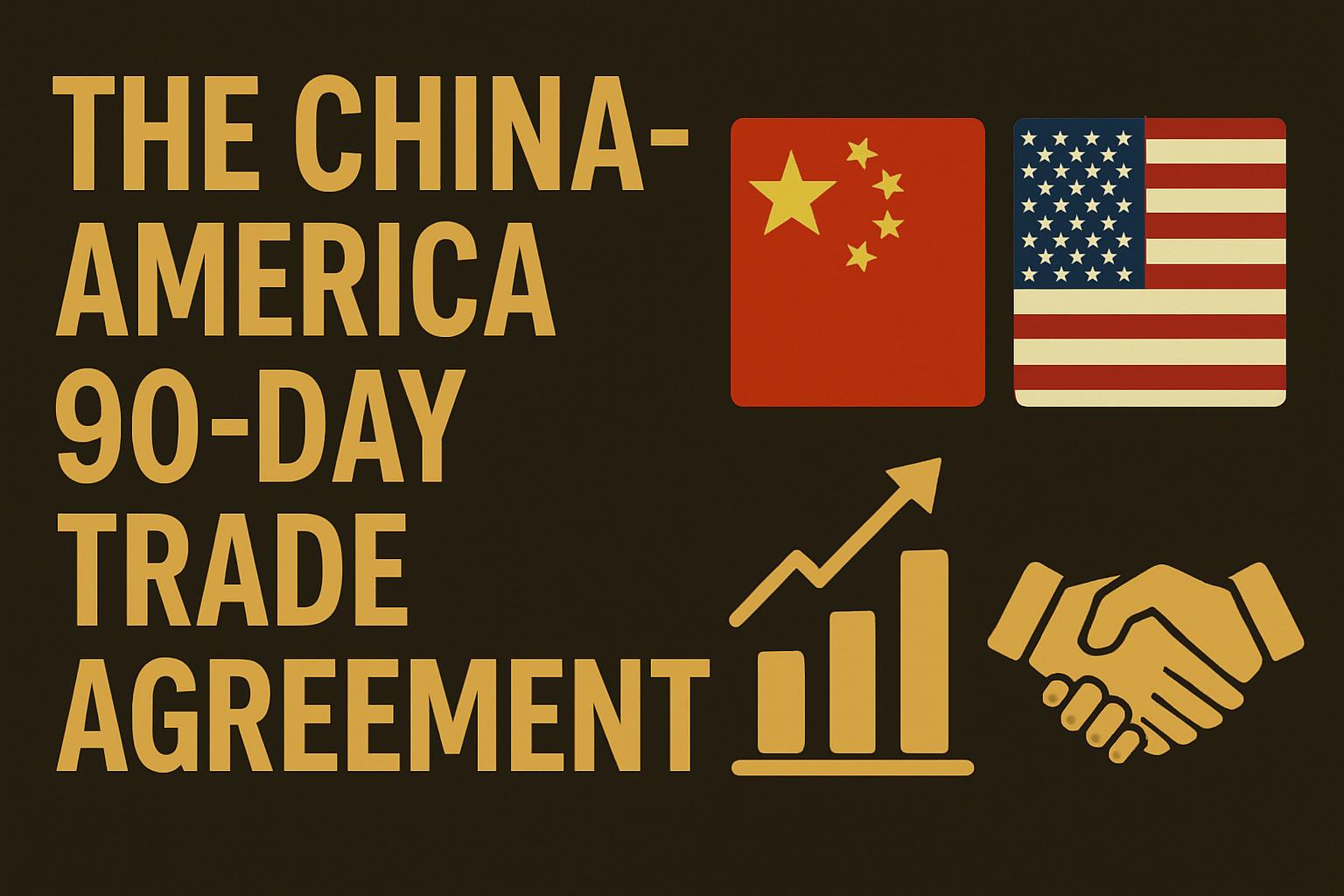
The China-America 90-Day Trade Agreement: What It Really Means for Your Money
Global headlines lit up: “China-America reach 90-day trade agreement!”
Sounds promising, right? But here’s the real question:
What does it mean for your wallet, your savings, and your next smart move as an investor?
Let’s break it down in plain terms. At The Gold Marketplace, we believe in educating first, selling second. So we’re unpacking this new trade truce in a way that actually helps you understand how global politics affect your purchasing power and why moments like these are exactly when gold and silver shine the brightest.
What Is the China-America 90-Day Deal?
It’s not a peace treaty. It’s a pause.
For 90 days, the U.S. and China have agreed to stop escalating their tariff war and instead work toward resolving long-standing trade issues like tech disputes, export bans, and intellectual property fights. It’s a chance to “cool off” after years of tension.
But let’s be honest: 90 days is a blink in global economics. It’s not a fix. It’s a delay.
Why This Impacts You Even If You’re Not a Trader
You might think, “I don’t import or export. Why should I care?”
Here’s the truth: Global trade tensions hit you at the checkout line.
Tariffs = price hikes. From groceries to electronics, you pay more when imports get taxed.
Uncertainty = weaker dollar. When investors get nervous, the dollar often dips.
Policy shifts = market volatility. Stock portfolios and retirement accounts ride these waves.
And when the dollar weakens, guess what gets stronger?
Gold. Every time.
Will The China-America Deal Lower Inflation?
In the short term, maybe a little. But let’s be real:
Inflation isn’t just about trade. It’s about decades of money printing.
Food and housing prices? Still rising.
Your paycheck? Likely not keeping up.
This deal won’t reverse the damage. At best, it pauses the bleeding.
The Bigger Picture for Investors
Here’s what seasoned investors are watching right now:
- Gold vs. the Dollar – If the dollar slips post-deal, gold demand rises.
- Geopolitical risk – One wrong move in negotiations, and markets panic.
- Central Bank moves – They may hold interest rates… or surprise us. Either way, precious metals are a hedge.
- Supply chains – If trust breaks again, companies scramble, and prices skyrocket.
In short: This 90-day deal doesn’t reduce risk. It just reshuffles it.
Why Gold (Still) Wins
Gold doesn’t care about politics. It doesn’t need a president or a trade pact to back its value.
It’s been trusted for 5,000+ years as a store of wealth. And in times of uncertainty, that trust only grows.
Gold is:
- A hedge against inflation
- A discreet store of value
- Highly liquid and borderless
This 90-day deal is your reminder:
Don’t let your wealth sit vulnerable in a system that pivots every election cycle.
Trade deals come and go. Gold stays.
Use this 90-day window wisely! Do not just to follow the news, but to take action. Your future self will thank you.
Ready to act?
Explore our curated gold bars, silver coins, and investment-grade metals at The Gold Marketplace.
Because real money doesn’t lose value. It holds it.
Want a deeper look at how the banking system devalues your money AND how gold quietly protects it?
Download our FREE book:
Gold vs. The Banking Cartel – the must-read that breaks down everything your bank doesn’t want you to know.
Stolen Legacy: How Greek Philosophy Borrowed from Kemet
“If the Greeks are so original, why do their greatest minds study in Kemet?”
That’s not a rhetorical question. It’s the heart of Stolen Legacy, a groundbreaking book by George G.M. James that dares to confront one of the most deeply embedded myths in Western education: the myth that philosophy began in Greece.
Let’s unpack the real story—and why it matters more than ever.
The Lie We’ve Been Told
For centuries, Western academia has crowned Greece as the cradle of civilization, the birthplace of reason, logic, and philosophy. We all know the names: Plato. Aristotle. Socrates.
But George G.M. James boldly flips the script. In Stolen Legacy, he argues that these so-called “founders” of philosophy were not the originators—they were students.
Students of Kemet.
According to ancient records and consistent oral traditions, Greek scholars traveled to Kemet (Ancient Egypt) to study at temples that were the world’s first universities. The Temple of Waset (Luxor), the Temple of Per-Ankh (House of Life), and others offered rigorous instruction in math, astronomy, medicine, and—yes—metaphysics and philosophy.
So why is none of this taught in school?
What Plato, Aristotle, and Socrates Actually Learned
Let’s talk receipts.
Plato’s “Republic” echoes the teachings of Ma’at—the Kemetic principle of balance, truth, and justice.
Socrates’ concept of the immortal soul? You’ll find it centuries earlier in the Kemetic understanding of the Ka and Ba—spiritual elements of the self that survive physical death.
And Aristotle? His writings on ethics, logic, and science bear remarkable resemblance to texts found in the Egyptian Book of Instruction and the Book of the Dead.
These weren’t coincidences. They were adaptations.
Plato allegedly studied in Kemet for 13 years. The Greeks themselves admitted it. But the history books? They left that part out.
Why?
Because the truth threatens the very foundation of Eurocentric supremacy in academia.
Why This Truth Still Matters Today
Here’s the thing: reclaiming this stolen history isn’t just about pride—it’s about power.
When an entire civilization like Kemet is whitewashed from the record, it disconnects people of African descent from their legacy of innovation, intellect, and spiritual wisdom.
Imagine what could happen if students around the world were taught that philosophy started in Africa. That geometry, medicine, and metaphysics have Black roots. That our ancestors were the teachers of the world—not its footnotes.
It would change everything.
Time to Reclaim the Legacy
This isn’t just about correcting a textbook. It’s about reawakening the truth—and living it.
That’s why I don’t just teach this history from the podium. I walk it with you—in the temples, on the Nile, and beneath the same stars our ancestors once studied. Our Kemet 101 Educational Tour is a journey through time, back to the source of human knowledge.
So I leave you with this:
What else have they hidden? And what will you do to uncover it?
Join us. Walk the sacred path. Reclaim the stolen legacy.

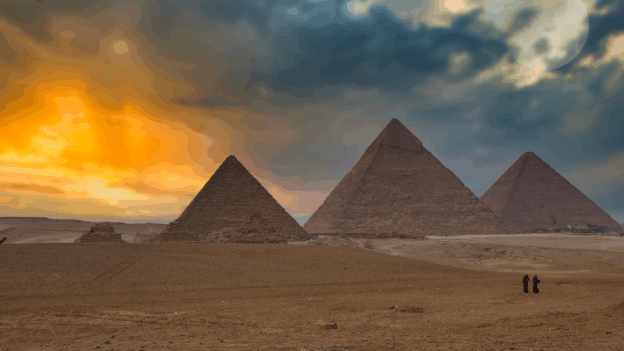
The Truth About the Pyramids: Engineering, Energy, & Hidden Knowledge
You’ve seen the photos. You’ve heard the legends. But are you ready to learn the truth?
For centuries, the world has stood in awe of the Great Pyramid of Giza—one of the last remaining wonders of the ancient world. But what if everything we’ve been told about it is wrong—or, at the very least, incomplete?
The truth about the pyramids isn’t just buried under stone. It’s been hidden by academic arrogance, colonial narratives, and a refusal to acknowledge the brilliance of ancient African science.
Let’s have an honest conversation about what these monuments really are, who built them, and why they still defy modern explanation.
Were the Pyramids Actually Power Plants?
We’ve been taught to see the pyramids as royal tombs. Yet there’s no conclusive evidence of a single pharaoh ever being buried inside the Great Pyramid. What we do see is something far more advanced, which is an engineered structure built with such precision that it rivals today’s most sophisticated technology.
Let’s be clear: the Great Pyramid is aligned perfectly with the cardinal points. It sits at the exact center of the Earth’s landmass. It uses materials like quartz-laden granite, which can generate energy under pressure. And its internal structure resembles not a tomb, but a machine.
Could the ancients of Kemet have understood how to generate, store, or even transmit energy?
That’s not just speculation, it’s a possibility we can no longer ignore.
Sacred Geometry: Architecture as Spiritual Technology
The architects of Kemet weren’t just engineers. They were scientists, astronomers, and spiritual masters.
Every inch of the Great Pyramid reflects the principles of sacred geometry, which is the divine mathematical language embedded in creation itself. The proportions mirror pi, the golden ratio, and even constants found in astronomy and physics.
This wasn’t accidental. This was intentional, coded intelligence meant to preserve universal knowledge for generations to come.
Sacred sites across Kemet aren’t just beautiful—they’re functional, energetic, and built in harmony with the cosmos. In today’s language, we might call this “ancient science.”
But the truth is: they understood things we are only beginning to rediscover.
Why Modern Science Still Can’t Explain the Pyramids
Modern Egyptologists often speak with certainty. But when pressed on the mechanics of pyramid construction, they fall silent or resort to theory.
How do you explain constructing a monument so precise that it would take us decades to replicate with our most advanced tools?
We are taught that ancient African civilizations were primitive. That they lacked the tools and intellect of today.
But here’s the reality:
The people of Kemet weren’t behind us.
They were ahead of us.
It’s time we started giving them the respect they deserve, not just as cultural icons, but as intellectual giants.
Want to See It for Yourself?
No textbook or documentary can compare to the experience of standing before the Great Pyramid with your own eyes.
That’s why I invite you to join me on the Kemet 101 Educational Tour—a 12-day journey through the ancient land of Kemet. Together, we’ll explore the pyramids, temples, tombs, and sacred sites with clarity, context, and cultural pride.
You’ll learn:
- The true function of the pyramids (beyond tourist myths)
- How the Nile Valley shaped global civilization
- What modern science won’t admit about ancient African knowledge
This isn’t just a tour. It’s a reclamation of our ancestral legacy. One that shifts your mindset, your spirit, and your place in the global narrative.
Help Spread the Truth (and Get Paid to Do It)
If you believe in our mission, there’s a way you can get involved.
The Kemet 101 Affiliate Program allows you to earn income while helping others experience this transformative journey. Whether you’re a teacher, a traveler, a creator, or simply someone who wants to make a difference, here’s what you’ll get:
- Affiliates are entitled to $200 on each 12 Day Kemet 101 sale that is generated through their unique link that we will create for you.
- We provide a variety of free banners and links.
We need truth-tellers. We need bridge-builders. And we need you.
The Pyramids Were Not Tombs.
They Are Testaments.
To the genius of Black people. To the power of spiritual science. To the wisdom of Kemet.
The question is no longer were they power plants?
The question is: Are we ready to receive the power they left behind?
🔗 Join the Tour Now
🔗 Become an Affiliate

Long-Term Implications of Tariffs on the Global Economy
Over the past few months, global headlines have been dominated by tariff announcements and trade retaliation. But while immediate market responses often steal the spotlight, it’s the long-term consequences of these actions that investors must not ignore.
This blog dives into how prolonged trade tensions could fundamentally reshape economic strategies across the globe—and why gold remains a pillar of financial resilience amid the uncertainty.
Implications of Tariffs: A Shift in Global Economic Policies
Tariffs are not just taxes on imports; they are tools that reshape supply chains, alter alliances, and trigger global economic realignment. When countries raise barriers, they force others to look inward—or find alternative partners.
One clear example is the ongoing tariff rift between the U.S. and China. According to the Peterson Institute for International Economics, U.S. imports from China fell by nearly 25% between 2018 and 2023 due to prolonged tariffs. In turn, China increased trade with ASEAN nations and the EU.
As more nations adopt protectionist policies, global trade becomes less predictable. Multinational corporations are already responding:
Apple shifted part of its iPhone production to India.
Volkswagen opened new factories in Brazil and Eastern Europe to reduce dependence on Chinese parts.
The IMF forecasts global GDP to shrink by 0.4% annually by 2026 if tariff escalations continue.
These are not short-term shifts. These are structural changes that may define the next decade of global commerce.
Implications of Tariffs: Inflation That Doesn’t Go Away
Unlike short-term inflation caused by supply shocks, tariff-driven inflation has staying power. That’s because it often leads to permanent changes in how goods are produced and distributed.
Let’s consider agricultural goods:
When tariffs were imposed on Canadian fertilizer in 2023, U.S. farmers faced input cost increases of up to 15%. Even after global prices eased, the lack of a stable trade route meant those elevated costs persisted into the 2024 planting season.
This pattern is now repeating across other industries:
Automotive parts tariffs raised repair and insurance costs for American drivers by 6.1% in 2024.
A Bank of America study projects that if trade barriers continue, U.S. consumer prices could stay 8–10% higher over the next five years compared to a no-tariff scenario.
In essence, once inflation embeds itself into the system due to tariffs, it doesn’t quietly leave.
Implications of Tariffs: Investor Behavior Is Evolving
As global uncertainty becomes the norm, investor behavior is changing. More people are looking beyond traditional assets and into alternatives that offer stability and hedge against global risk.
And no asset does that better than gold.
According to the World Gold Council, investment demand for gold surged 21% in 2023, not because of recession fears alone—but because of persistent geopolitical and trade instability. The long view is clear: gold doesn’t just react—it endures.
In 2025, amid renewed tariff talks and currency volatility, gold has already reached $3,127 per ounce, up from $2,265 the year prior. This is not just a commodity rising—it’s a reflection of deep systemic mistrust in paper assets and policy consistency.
Own What the World Trusts: Gold
If you believe the world is entering a new era of economic complexity, then it’s time to build protection into your financial future. At The Gold Marketplace, we provide authentic gold bars, coins, and bullion to help investors hedge against long-term global risk.
Global uncertainty doesn’t pause for retirement planning. That’s why a Gold IRA is more relevant than ever. By converting part of your retirement savings into physical gold, you reduce your dependence on dollar-based assets—and gain peace of mind.
📥 Download Our Free Gold IRA Guide
In our eye-opening book, Gold vs The Banking Cartel, Dr. Perry Kyles lays out how modern banking systems manipulate currency and how long-term financial traps are hidden behind “official policy.”
Final Thoughts
Tariffs are not just a headline. They are long-term signals that the world economy is entering a new phase—one marked by protectionism, inflation, and global realignment.
Gold is not a reactionary move. It’s a forward-thinking strategy.
As trade policies evolve and the global economy reshapes, one truth remains: those who prepare early are rarely the ones who suffer later.
Lessons for Investors: Learning from National Gold Strategies
The strategies of countries dominating gold reserves in 2025 offer valuable lessons for individual investors. By observing the actions of nations like the United States, China, and Russia, we can better understand how to leverage gold as a hedge against economic instability and a tool for wealth preservation. In this blog, we’ll break down the takeaways from national gold strategies and translate them into actionable insights for personal financial planning.
How National Gold Reserves Reflect Stability
Gold reserves are not just numbers; they represent a country’s financial security and geopolitical strategy. Nations accumulate gold to:
- Diversify portfolios – Reducing dependency on volatile fiat currencies.
- Build economic resilience – Safeguarding against global shocks.
- Strengthen their international standing – Using gold to instill confidence in their economies.
For investors, these reasons highlight why gold is a cornerstone of long-term financial security. Just as countries seek stability through gold, so can you by incorporating it into your portfolio.
Real Examples from Global Strategies
1. United States: Leveraging Stability
The United States leads global gold reserves, holding 8,133.5 metric tons. This vast stockpile has helped the U.S. maintain its position as a financial powerhouse, despite debates over the dollar’s stability. In 2024, during a volatile inflationary period, the U.S. government increased its reserves by 2%. This strategic move underlined gold’s importance as a hedge against economic uncertainty.
Lesson for Investors:
Even the largest economies depend on gold to ensure stability. For individual investors, gold can act as a safety net during market volatility or currency fluctuations.
2. China: Strategic Accumulation
China’s focus on gold accumulation has been unrelenting. By 2025, its reserves reached 2,350 metric tons, making it the second-largest holder globally. In 2024 alone, China added 200 metric tons to its reserves. This aggressive strategy aligns with its long-term goal to challenge the dominance of the U.S. dollar in global trade.
Lesson for Investors:
China’s gold strategy shows the importance of forward-thinking. Regularly increasing your gold investments over time, even in small increments, can help build a robust financial foundation.
3. Russia: Hedging Against Geopolitical Risks
Russia’s commitment to gold as a safeguard against external shocks is clear. By 2025, its reserves reached 2,375 metric tons. Amid sanctions and trade disruptions in 2024, Russia’s central bank acquired an additional 100 metric tons of gold. This move ensured liquidity and economic stability during international trade challenges.
Lesson for Investors:
Gold’s tangible nature makes it a reliable asset during crises. Diversifying your portfolio with physical gold can protect you from unexpected market disruptions.
What 2024 Taught Us about National Gold Strategies
Example 1: Banking Instabilities in Europe
In 2024, multiple mid-sized banks in Europe faced liquidity crises due to rising interest rates. Investors who had diversified their portfolios with gold reported losses mitigated by gold’s value increase of nearly 7%.
Example 2: Asian Market Volatility
The 2024 fluctuations in Asian markets, driven by geopolitical tensions, caused a significant sell-off in equities. Meanwhile, gold prices in the region surged by 5%, proving its role as a haven for investors amid uncertainty.
Actionable Steps for Individual Investors
1. Start Small but Stay Consistent
Much like China’s strategy, incremental investments in gold can add up over time. Explore our range of gold products, from coins to bars, to begin your journey.
2. Explore Tax-Advantaged Options
National gold strategies often prioritize tax efficiency in gold reserves. Similarly, you can benefit from gold IRAs, which offer significant tax advantages while securing your financial future.
3. Educate Yourself with In-Depth Knowledge
Understanding the global dynamics of gold is essential for informed investing. Our book, Gold vs the Banking Cartel, dives deep into the economic forces shaping gold’s role in wealth protection.
National gold strategies serve as a blueprint for financial security. By learning from the approaches of global leaders like the U.S., China, and Russia, individual investors can make smarter, more resilient decisions. Whether it’s hedging against inflation, preparing for market volatility, or building long-term wealth, gold remains a trusted ally.
Start securing your future today. Whether it’s a gold coin, a bar, or a tax-advantaged IRA, every investment brings you closer to financial peace of mind.