Author Archives: Perry Large

Top 5 Books to Deepen Your Understanding of Kemet

Kemet, known today as Ancient Egypt, remains one of the most fascinating civilizations in human history. From its monumental architecture to its spiritual philosophy, Kemet has influenced the world for thousands of years. Yet, beyond the pyramids and temples, there is a wealth of knowledge waiting to be explored.

For those who wish to dive deeper into the legacy of Kemet, books remain a powerful gateway. Below, we highlight five essential works that shed light on the culture, spirituality, and global influence of this great civilization.

Key note

Each book is available in the Kemet 101 shop, making it easy to begin your journey of discovery.

1. Egypt and Her Neighbours: A Reader Paperback

Understanding Kemet also means understanding its neighbors. This book provides valuable insight into the political, cultural, and economic relationships Kemet shared with surrounding civilizations such as Nubia, Mesopotamia, and the Mediterranean world.

For example, did you know that Nubia was not only a source of gold but also a powerful cultural partner? Archaeological evidence shows strong Nubian influences in Egyptian art and religion, proving that Kemet was not isolated but interconnected. Studies reveal that trade between Kemet and its neighbors contributed significantly to its prosperity, with Egypt importing cedar wood from Lebanon, copper from Sinai, and lapis lazuli from Afghanistan.

📖 Get your copy here and discover the networks that shaped Kemet’s rise.

2. Ancient Egypt: Light of the World

This classic work explores the symbolic and spiritual dimensions of Kemet. It delves into myths, religious practices, and cosmology, offering a deeper understanding of how the ancient Egyptians viewed the universe.

For instance, the concept of Ma’at—balance, truth, and order—was not only a spiritual principle but also the foundation of law and governance. Today, scholars compare Ma’at to modern ideas of social justice and ethical responsibility. By studying these teachings, readers can better appreciate how Kemetic thought continues to influence modern philosophy and religion.

📖 Start reading today to uncover the spiritual wisdom of Kemet.

3. Egyptian Ideas of the Future Life (Classic Book Series)

Death was not the end for the people of Kemet, it was a transition. This book explains ancient Egyptian beliefs about the afterlife, a subject that has fascinated people for centuries.

The Great Pyramid of Giza, for example, was not just a tomb but a monument to eternity. Recent studies show that nearly 70% of Egyptian tomb inscriptions referenced the journey of the soul to the afterlife. These texts reflect the deep concern for immortality and spiritual preparation. Such practices remind us that Kemet valued both physical and spiritual existence, teaching us about the human desire for meaning beyond life on Earth.

📖 Add this classic to your library and explore the mysteries of the afterlife.

4. The Book of the Dead: From the Tomb of Ani (Classic Book Series)

Perhaps the most famous of Egyptian texts, The Book of the Dead was a guide for the soul’s journey after death. This version, taken from the tomb of Ani, contains powerful illustrations and spells intended to secure safe passage in the afterlife.

Modern scholars compare this text to a “spiritual roadmap.” For example, the famous Weighing of the Heart scene illustrates the belief that one’s heart must be lighter than a feather to enter paradise. Studies in comparative religion show that this idea influenced later traditions, including aspects of Christian and Islamic teachings about judgment.

📖 Explore this masterpiece and experience one of the most important spiritual texts of all time.

5. The Kybalion

Although written much later, The Kybalion captures Hermetic principles rooted in Kemetic thought. This work discusses timeless spiritual laws such as mentalism, correspondence, and rhythm.

For example, the principle of correspondence, summed up in the phrase “As above, so below”, reflects a worldview that everything in the universe is connected. Today, psychologists and scientists alike discuss similar ideas when studying human consciousness, ecosystems, and even quantum physics. By reading The Kybalion, you can see how ancient wisdom continues to inform modern understanding.

📖 Discover the Hermetic teachings and connect with timeless knowledge.

Take the Next Step: Experience Kemet for Yourself

At Kemet 101, we offer a 12-day educational tour of Egypt led by Dr. Perry Kyles, a historian with decades of expertise. This tour is not just sightseeing—it is a guided journey into the heart of Kemet’s history, culture, and spirituality.

✈️ Join our next educational tour to Egypt and experience Kemet beyond the pages.

Stolen Legacy: How Greek Philosophy Borrowed from Kemet

“If the Greeks are so original, why do their greatest minds study in Kemet?”

That’s not a rhetorical question. It’s the heart of Stolen Legacy, a groundbreaking book by George G.M. James that dares to confront one of the most deeply embedded myths in Western education: the myth that philosophy began in Greece.

Let’s unpack the real story—and why it matters more than ever.

The Lie We’ve Been Told

For centuries, Western academia has crowned Greece as the cradle of civilization, the birthplace of reason, logic, and philosophy. We all know the names: Plato. Aristotle. Socrates.

But George G.M. James boldly flips the script. In Stolen Legacy, he argues that these so-called “founders” of philosophy were not the originators—they were students.

Students of Kemet.

According to ancient records and consistent oral traditions, Greek scholars traveled to Kemet (Ancient Egypt) to study at temples that were the world’s first universities. The Temple of Waset (Luxor), the Temple of Per-Ankh (House of Life), and others offered rigorous instruction in math, astronomy, medicine, and—yes—metaphysics and philosophy.

So why is none of this taught in school?

What Plato, Aristotle, and Socrates Actually Learned

Let’s talk receipts.

Plato’s “Republic” echoes the teachings of Ma’at—the Kemetic principle of balance, truth, and justice.

Socrates’ concept of the immortal soul? You’ll find it centuries earlier in the Kemetic understanding of the Ka and Ba—spiritual elements of the self that survive physical death.

And Aristotle? His writings on ethics, logic, and science bear remarkable resemblance to texts found in the Egyptian Book of Instruction and the Book of the Dead.

These weren’t coincidences. They were adaptations.

Plato allegedly studied in Kemet for 13 years. The Greeks themselves admitted it. But the history books? They left that part out.

Why?

Because the truth threatens the very foundation of Eurocentric supremacy in academia.

Why This Truth Still Matters Today

Here’s the thing: reclaiming this stolen history isn’t just about pride—it’s about power.

When an entire civilization like Kemet is whitewashed from the record, it disconnects people of African descent from their legacy of innovation, intellect, and spiritual wisdom.

Imagine what could happen if students around the world were taught that philosophy started in Africa. That geometry, medicine, and metaphysics have Black roots. That our ancestors were the teachers of the world—not its footnotes.

It would change everything.

Time to Reclaim the Legacy

This isn’t just about correcting a textbook. It’s about reawakening the truth—and living it.

That’s why I don’t just teach this history from the podium. I walk it with you—in the temples, on the Nile, and beneath the same stars our ancestors once studied. Our Kemet 101 Educational Tour is a journey through time, back to the source of human knowledge.

So I leave you with this:

What else have they hidden? And what will you do to uncover it?

Join us. Walk the sacred path. Reclaim the stolen legacy.

The Truth About the Pyramids: Engineering, Energy, & Hidden Knowledge

You’ve seen the photos. You’ve heard the legends. But are you ready to learn the truth?

For centuries, the world has stood in awe of the Great Pyramid of Giza—one of the last remaining wonders of the ancient world. But what if everything we’ve been told about it is wrong—or, at the very least, incomplete?

The truth about the pyramids isn’t just buried under stone. It’s been hidden by academic arrogance, colonial narratives, and a refusal to acknowledge the brilliance of ancient African science.

Let’s have an honest conversation about what these monuments really are, who built them, and why they still defy modern explanation.

Were the Pyramids Actually Power Plants?

We’ve been taught to see the pyramids as royal tombs. Yet there’s no conclusive evidence of a single pharaoh ever being buried inside the Great Pyramid. What we do see is something far more advanced, which is an engineered structure built with such precision that it rivals today’s most sophisticated technology.

Let’s be clear: the Great Pyramid is aligned perfectly with the cardinal points. It sits at the exact center of the Earth’s landmass. It uses materials like quartz-laden granite, which can generate energy under pressure. And its internal structure resembles not a tomb, but a machine.

Could the ancients of Kemet have understood how to generate, store, or even transmit energy?

That’s not just speculation, it’s a possibility we can no longer ignore.

Sacred Geometry: Architecture as Spiritual Technology

The architects of Kemet weren’t just engineers. They were scientists, astronomers, and spiritual masters.

Every inch of the Great Pyramid reflects the principles of sacred geometry, which is the divine mathematical language embedded in creation itself. The proportions mirror pi, the golden ratio, and even constants found in astronomy and physics.

This wasn’t accidental. This was intentional, coded intelligence meant to preserve universal knowledge for generations to come.

Sacred sites across Kemet aren’t just beautiful—they’re functional, energetic, and built in harmony with the cosmos. In today’s language, we might call this “ancient science.”

But the truth is: they understood things we are only beginning to rediscover.

Why Modern Science Still Can’t Explain the Pyramids

Modern Egyptologists often speak with certainty. But when pressed on the mechanics of pyramid construction, they fall silent or resort to theory.

How do you explain constructing a monument so precise that it would take us decades to replicate with our most advanced tools?

We are taught that ancient African civilizations were primitive. That they lacked the tools and intellect of today.

But here’s the reality:

The people of Kemet weren’t behind us.
They were ahead of us.

It’s time we started giving them the respect they deserve, not just as cultural icons, but as intellectual giants.

Want to See It for Yourself?

No textbook or documentary can compare to the experience of standing before the Great Pyramid with your own eyes.

That’s why I invite you to join me on the Kemet 101 Educational Tour—a 12-day journey through the ancient land of Kemet. Together, we’ll explore the pyramids, temples, tombs, and sacred sites with clarity, context, and cultural pride.

You’ll learn:

  • The true function of the pyramids (beyond tourist myths)
  • How the Nile Valley shaped global civilization
  • What modern science won’t admit about ancient African knowledge

This isn’t just a tour. It’s a reclamation of our ancestral legacy. One that shifts your mindset, your spirit, and your place in the global narrative.

Help Spread the Truth (and Get Paid to Do It)

If you believe in our mission, there’s a way you can get involved.

The Kemet 101 Affiliate Program allows you to earn income while helping others experience this transformative journey. Whether you’re a teacher, a traveler, a creator, or simply someone who wants to make a difference, here’s what you’ll get:

  • Affiliates are entitled to $200 on each 12 Day Kemet 101 sale that is generated through their unique link that we will create for you.
  • We provide a variety of free banners and links.

We need truth-tellers. We need bridge-builders. And we need you.

The Pyramids Were Not Tombs.

They Are Testaments.

To the genius of Black people. To the power of spiritual science. To the wisdom of Kemet.

The question is no longer were they power plants?

The question is: Are we ready to receive the power they left behind?

🔗 Join the Tour Now
🔗 Become an Affiliate

Black History Connection: Kemet’s Influence on African Culture

What if everything you thought you knew about African history was just the tip of the pyramid?

When we celebrate Black History, we often start with struggle. But the truth is, Black history begins with greatness—with a civilization so advanced that it became the foundation for countless cultures across Africa and the world.

That civilization is Kemet—the land the Greeks later renamed Egypt.

The Origin Story: Before the World Took Notice

Long before Europe’s rise or even the idea of the West, there was Kemet—the “Black Land.” It was not only a nation of pyramids and pharaohs, but a living university of astronomy, medicine, art, engineering, spirituality, and law.

This was not a civilization in isolation. Its influence radiated like the sun across the African continent. Through migration, trade, and spiritual exchange, Kemet seeded timeless traditions into neighboring kingdoms, especially Nubia, Kush, Axum, and even as far west as Ghana and Mali.

Kemet wasn’t just Africa’s past. It was—and still is—Africa’s backbone.

The Spiritual Blueprint of the Continent

The spiritual systems of Africa didn’t emerge randomly. Many of them reflect the sacred principles first recorded on the walls of Kemet’s temples.

Take Ma’at, the Kemetic concept of balance, truth, and cosmic order. You’ll find echoes of Ma’at in the moral teachings of the Yoruba, the cosmology of the Dogon, and the ancestral reverence of the Akan. Kemet taught that the soul’s purpose was to live in alignment with the divine—a truth still honored today in African spiritual practices across the globe.

The afterlife beliefs, use of sacred symbols, ritual storytelling, even the wearing of certain colors and regalia—many of these stem from Kemet’s spiritual science.

Language, Leadership & Legacy

The concept of divine leadership—where the ruler is both political and spiritual—didn’t die with the Pharaohs. It migrated. The idea of sacred kingship appears in ancient Ethiopia, among the Ashanti of Ghana, and in royal systems from the Congo to the Zulu Kingdom.

African languages, too, carry the linguistic fingerprints of Kemet. From shared word roots to cosmological terms, Kemet’s intellectual legacy is quietly embedded in the very languages people speak to this day.

And the art? From West African masks to Nubian jewelry, the influence of Kemetic aesthetics is undeniable. The symbolism, symmetry, and spiritual purpose in African art all echo Kemet’s visual language.

Why This Connection Matters More Than Ever

The erasure of Kemet’s African roots wasn’t accidental. For centuries, the idea that Africans could have built such a brilliant civilization was downplayed—or outright stolen.

But the truth is rising. Rediscovering Kemet isn’t just an academic pursuit—it’s a reclamation of identity.

Understanding this connection transforms the way we see Africa—and ourselves. It tells our children that their history doesn’t begin in chains. It begins in crowns, temples, and stars.

Step Into the Story: The Kemet 101 Tour

Want to do more than just read about this history? Walk it. Touch it. Feel it.

Join us on the Kemet 101 Educational Tour to Egypt with Dr. Perry Kyles—a 12-day journey through ancient temples, sacred tombs, and living history. This isn’t a vacation. It’s a spiritual return. It’s your personal reconnection with the roots of Black brilliance.

🛕 Experience the real Kemet. Feel the truth for yourself.

👉 Book your place on the Kemet 101 Tour


📚 Learn. Reclaim. Awaken.

The African Origins of Civilization: What They Don’t Teach in Schools

Walk into most schools today and you’ll likely hear that civilization began in places like Mesopotamia or Greece. You’re taught that science, mathematics, medicine, and philosophy were European contributions. But if you’ve been studying African Origins seriously, you know that narrative doesn’t hold up.

The truth is, long before Greece, long before Rome, long before the so-called “cradles of civilization,” there was Kemet.

Kemet is the name that the ancients used to describe their land. It means “The Black Land.” Now, some say this referred to the fertile soil of the Nile Valley. But those of us who have studied the people, the culture, and the legacy of Kemet know it was also a reference to the people themselves. They were Black. They were African. And they were brilliant.

This is the story they don’t teach you in school. But it’s written in stone.

African Origins

The Foundation of the Sciences

If you’ve ever stood before the Great Pyramid, you understand this wasn’t built by guesswork or superstition. The builders of Kemet understood geometry, engineering, astronomy, and logistics. Every stone was placed with intent. The alignment of temples and pyramids with the stars is not coincidental. It reflects a scientific understanding that predates the Greek world by thousands of years.

We are often told that Pythagoras “discovered” the 3-4-5 triangle. But that formula was being used by builders in Kemet long before Pythagoras was born. The proof is in the architecture.

When you study Imhotep, you find a man who was both a healer and an architect. He designed the Step Pyramid of Djoser, and he wrote medical treatises that include surgical techniques and plant-based remedies. Imhotep lived nearly 2,000 years before Hippocrates. Yet one is called “the father of medicine” while the other is nearly forgotten outside of African-centered study.

Black African People Built Kemet

Let me be clear. The people who built Kemet were Black Africans.

This is not just my opinion. This is not some fringe theory. This is supported by the physical evidence — the statues, the paintings, the hairstyles, the medu netcher (hieroglyphs), and the geographical flow of culture from the south to the north.

Kemet did not rise from the Mediterranean. It rose from Nubia, from the heart of Africa, and it moved north along the Nile. In fact, when you visit Aswan and Elephantine Island, and you speak with Nubian scholars, you begin to understand that the south is the root of it all.

But over time, the image of these people changed. Not because the truth changed, but because of colonial influence.

The Whitewashing of African History

Colonial scholars had a problem. If the world knew that Africa birthed civilization, it would destroy the myth of African inferiority. So they rewrote history.

They removed noses from statues. They repainted images with lighter skin. They labeled spiritual systems as “mythology” while embracing the borrowed fragments in European systems as divine truth.

Museums across the Western world are filled with artifacts from Kemet, but the interpretation is filtered through a colonial lens. The names are changed. The people are lightened. The story is stripped of its African context.

This was no accident. It was strategic.

What We Must Do Now for Our African Origins

We can’t wait for school systems to catch up. We must teach ourselves. We must teach our children. We must study the texts, walk the land, and listen to the voices of our ancestors.

Kemet wasn’t a mystery. It wasn’t a myth. It was a thriving African civilization that shaped the world. And it is our duty to reclaim it — not just for the sake of pride, but for the sake of truth.

If you want to understand modern civilization, you need to understand Kemet. If you want to understand yourself, your lineage, and your purpose, you need to understand the values that guided our ancestors — values like Ma’at, which stood for balance, truth, justice, and reciprocity.

Those values built Kemet. And they can still build us today.

Join the journey. Reclaim the legacy. The truth is written in stone.

📖 For more resources about African Origins, visit Kemet101.com where you can find books, learning tools, and information on our upcoming educational tour.

5 Sites In Egypt That You MUST See!

The historical sites of Egypt are among the most visited in the world. Travelers visit the historical sites of Egypt to see the remnants of the ancient civilization whose citizens referred to it as Kemet. There are hundreds of historical sites, museums, and monuments in Egypt that relate to Kemet. Very few travelers have decades to give serious attention to each of them. To maximize your understanding and to make your experience memorable, I will give 5 sites that I believe are essential to exploring the world of Kemet during your visit to the Arab Republic of Egypt. Honorable mention goes to Hatshepsut’s great temple “Djeser Djeseru”, or “the Most Select and Holiest of Places”, at Deihr el-Bahri.

5. Karnak Temple

Karnak is perhaps the largest temple in the world. The ancients referred to it as “Ipet-isut”, which means “The Most Select of Places”. It may have been in existence during the Old Kingdom but became more relevant during the Middle Kingdom. Spirituality was an important part of Kemetic life for royalty, priests, scribes, and every day folk. The temple, its features, and its inscriptions give a window into Kemetic spiritual life. The rise of this impactful temple was contemporaneous with the rise of the almighty god Amen. Amen had a wife/compliment named Mut and a son named Khonsu, both of which have temples attributed to them at the Karnak Temple. Karnak is THE spiritual center of a spiritual center.

4. Temple of Seti

The temple of Seti l at Abydos is extremely important, yet overlooked by tourists. If you travel to Egypt to educate yourself about the ancients, or to explore the life and culture of Kemet, I think you MUST see the King’s List at Abydos. The King’s list is one of the most important sites, and historical documents that is still intact, although it has experienced some damage. Proper socialization and knowledge of the ancestors was an important part of preparing Kemetic kings to be successful. This King’s List features Seti l teaching his son Ramses ll about the great kings of Kemet. Ramses ll is featured with a child with the side-lock of hair. This list is one of the resources that reveals the sequence of kings. The temple is about a 3 drive from Luxor, but it is well worth it for educational purposes. 

3. Abu Simbel

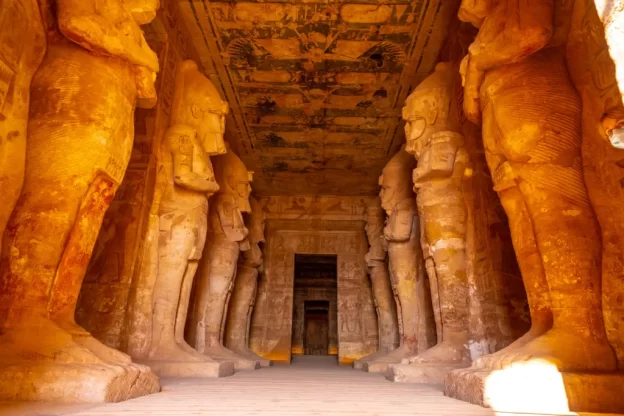
At Abu Simbel you will see Ramses ll’s temple, which is dedicated to gods Ptah, Ra-Horakhty, Amun, and the deified Ramses ll. It not only features his reverence for the deities like MA’AT, but historical accounts of his own life. Ramses ll was a part of the 19th Dynasty, which emerged from military leadership. This reality is reflected in the iconography of this great temple. The beauty and exceptional craftsmanship are striking. Adjacent to Ramses ll’s temple is a temple to his great wife Nefertari who was from the region that is today Sudan. Her temple is dedicated to the goddess Het-Heru, who is often referred to by the Greek name Hathor. The temple is also astonishing in its beauty. It has important political significance as this marriage brought peace between two political entities. If you view these two temples with a good guide, you will have an excellent feel for the world of Ramses ll and Nefertari, and the spirit of the times in which they ruled.

2.  The Museum of Egyptian Antiquities in Cairo

The Egyptian Museum is a must-see for anyone that visits Egypt to explore Kemetic History. The museum was first opened in 1902 and has faced a number of challenges ranging from theft to corruption. It has over 120,000 artifacts that range from the Pre-Historic era to the Late Period. What makes this museum special is not the number of artifacts, but the particular artifacts that you can see. There of several pieces from the rulership of Akhenaton. The Papyrus of Merer is an account of the process of transporting stone from the Sinai Peninsula to build Khafra’s pyramid. There is a small statue of Khufu, which is quite rare amongst all of the remaining artifacts from Kemet. I believe the most important artifact is the Narmer Palette, which is amongst the world’s oldest historical documents. This cosmetic palette is an indicator that it was Narmer that united the two lands. Through its symbology, it offers great insight into the priorities and culture of Kemet in the earliest era of unification of the two lands. The Grand Egyptian Museum and the National Museum can be interesting, however neither come close to the Egyptian Museum in regard to the range and significance of artifacts.

1. Giza Plateau

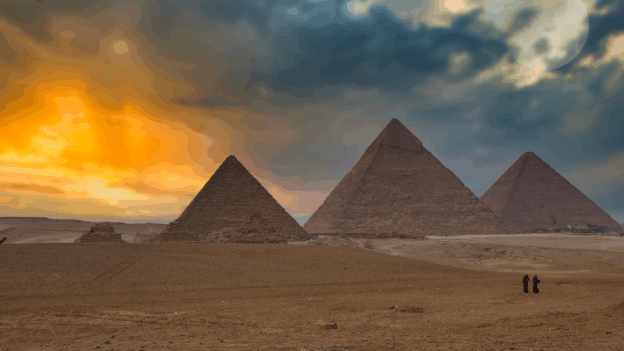
Of all the historical sites of Egypt, the most important and awe-inspiring is the Giza Plateau which the ancients referred to as “Kher Neter”. Egyptologist translate this as “the necropolis”. A necropolis is the land of the dead, like a cemetery for example. In the minds of the ancients, this would translate more like “The land of the reborn”. The 3 large pyramids are attributed to kings Khufu, Khafra, and Menkara of the 4th Dynasty. They are father, son, and grandson. Khufu’s pyramids stood 481 feet high/146.5 meters at one time. In the 1st century BCE a Greek scholar named Diodorus Siculus referred to Khufu’s pyramid as one of the 7 great wonders of the ancient world. Today it is the only one still standing, despite desecration over the hundreds of years. Each of the 3 major pyramids are unique in their own right. They represent a major step in the evolution of pyramid-building from the step pyramid of Djoser that was designed by Imhotep in the 3rd Dynasty.

The Giza Plateau also includes Her Em Akhet, which translates as “Heru on the Horizon”. It is known today as the Sphinx. There is lots of conjecture regarding the origins and meaning of this large and mysterious monolith. 

There are many important structures on the Giza Plateau that are impressive but overlooked. For example, the satellite pyramids of Khufu’s and Menkhara’s pyramids. One of the satellite pyramids is attributed to Khufu’s mother Hetepheres, who was hugely influential. The tomb of Mersankh in the eastern cemetery of the Giza Plateau is intact, with hieroglyphs to aid her transition to the next realm. The western cemetery, just west of Khufu’s pyramid, has a pyramid that is attributed to Hemiunu, who is acknowledged as the primary designer of the Giza Plateau. 

No one knows what the future holds. These sites have been under threat of destruction for over 1500 years. To this day, many are offended by their presence. Delve into the world of ancient Kemet while you still can. If you would like to experience a trip of a lifetime, join an educational tour that will be led by Perry Kyles, PhD. If you would like a guided tour of the Giza Plateau only, click here for a wonderful guide that will educate you and protect you from the unsavory elements in Egypt.