Tag Archives: financial planning

Breaking Free—How to Protect Yourself from Banking Cartel Control

Breaking Free—How to Protect Yourself from Banking Cartel Control


For decades, the banking cartel control money, credit, and financial policies. The system is designed to keep people in debt, inflate their savings away, and limit their financial choices. But you don’t have to play their game.

In Episode 214 of The International Risk Podcast, Dr. Perry Kyles explains how to break free from banking cartel control. This module reveals why fiat currency is designed to fail, how gold, silver, and Bitcoin offer real alternatives, and what steps you can take to protect your wealth.


Why Fiat Currency Loses Value Over Time


The U.S. dollar was once backed by gold. But in 1971, the U.S. abandoned the gold standard, allowing the government to print unlimited money. Since then, the dollar has steadily lost its value.

📌 The truth about fiat currency:

  1. It is backed by nothing – The government can create as much as it wants.
  2. Inflation destroys purchasing power – The more money printed, the less each dollar is worth.
  3. Your savings lose value – The same money buys fewer goods over time.

📌 Example: The Dollar’s Decline Since 1971

In 1971, $1 could buy 4 gallons of gas. Today, it buys less than a third of a gallon.

A brand-new car in 1971 cost $3,500. Today, the average price is over $48,000.

Since the Federal Reserve was created in 1913, the dollar has lost over 96% of its value.

🔹 Fiat money is failing, but gold never loses value. Start investing in gold today.


Gold and Silver – The Ultimate Alternative to the Banking Cartel Control


Unlike fiat money, gold and silver have been trusted stores of value for thousands of years. They cannot be printed, manipulated, or controlled by banks.

📌 Why gold and silver protect wealth:

  1. Scarcity – Gold and silver exist in limited supply.
  2. Tangible assets – They are real, unlike digital numbers in a bank account.
  3. Hedge against inflation – As paper money declines, gold rises in value.

📌 Example: Gold’s Price During Financial Crises

In 2008, gold was $700 per ounce. By 2011, it hit $1,900 while stocks crashed.

In 2023, gold surpassed $2,000, proving its long-term stability.

🔹 Central banks print money, but they cannot print gold. Shop gold and silver now.


How Bitcoin and Cryptocurrencies Challenge Banking Cartel Control


Bitcoin was created in 2009 after the 2008 financial crisis. It was designed to offer financial freedom outside government control. Unlike fiat money, Bitcoin is decentralized, meaning no central bank can manipulate it.

📌 How Bitcoin is different from fiat currency:

  1. Limited Supply – Only 21 million Bitcoin will ever exist.
  2. No Middlemen – Transactions happen without banks.
  3. Global Access – No government can shut it down.

📌 Example: Bitcoin vs. the U.S. Dollar

In 2010, Bitcoin was worth $0.08 per coin.

In 2021, Bitcoin reached $69,000—an increase of over 86 million percent.

While fiat money loses value, Bitcoin and gold hold purchasing power over time.

🔹 Bitcoin is digital gold, but real gold has survived for centuries. Learn about gold investing here.


Practical Strategies to Safeguard Personal Wealth from Banking Cartel Control


The banking cartel wants people dependent on fiat money. But you can take steps to secure your financial future.


1. Move Wealth Into Hard Assets

Gold, silver, and Bitcoin are not controlled by central banks. They hold value even when fiat money collapses.

📌 Fact: In Venezuela (2016-2021), hyperinflation wiped out savings. Gold and Bitcoin became the only safe stores of wealth.

👉 Protect your wealth with gold now.


2. Open a Gold IRA

A Gold IRA allows you to store retirement savings in physical gold instead of unstable paper assets.

📌 Fact: The U.S. printed over $5 trillion during the pandemic, driving inflation to 9% in 2022. Gold held its value.

👉 Secure your retirement with a Gold IRA.


3. Diversify Away from Banks

Relying solely on bank accounts exposes your money to inflation and financial instability. Consider holding:

  1. Gold and silver – Tangible stores of value.
  2. Bitcoin and cryptocurrencies – Decentralized and borderless.
  3. Alternative assets – Real estate and commodities.

📌 Fact: In 2013, Cyprus banks froze accounts and took customer funds to cover government debt. Those with gold and Bitcoin were unaffected.

👉 Read “Gold vs. The Banking Cartel” to learn more.


Final Thoughts – Take Control of Your Financial Future


The banking cartel is designed to keep people in debt. Their fiat money system rewards banks while devaluing personal savings. But you have the power to escape.

📌 The key to financial freedom is:

  1. Owning assets that banks cannot manipulate.
  2. Holding wealth outside of traditional banking.
  3. Taking action before the next financial crisis.

Most people won’t act until it’s too late. Those who understand the system and move into real assets will survive the next collapse.

💡 What’s your next move? Start securing your wealth today.

Breaking Free—How to Protect Yourself from Banking Cartel Control

The Future of Global Finance: What Comes After the Banking Cartels? — Dr. Perry Kyles on The International Risk Podcast

The Future of Global Finance: What Comes After the Banking Cartels? — Dr. Perry Kyles on The International Risk Podcast


For over a century, banking cartels have controlled global finance. Central banks manipulate money supply, interest rates, and credit access. They protect big financial institutions, not everyday people. But this system is beginning to crack.

In Episode 214 of The International Risk Podcast, Dr. Perry Kyles discusses the future of finance. Will there be a shift away from central banks and fiat currencies? Can decentralized finance (DeFi) and blockchain technology create real financial independence?

This blog, Module 3, explores what comes next.


Will the Global Finance Move Away from Central Banks?


For decades, people believed central banks were necessary for economic stability. But recent crises prove otherwise. Inflation is rising, national debts are unsustainable, and faith in fiat currency is declining. Many are asking: Do we still need central banks?


Signs that confidence in central banking is fading:

  1. Hyperinflation in Venezuela (2016-2021) – The Venezuelan bolívar lost 99.9% of its value, forcing people to use gold and crypto.
  2. The 2008 Financial Crisis – The Federal Reserve bailed out banks while millions lost homes and jobs.
  3. The U.S. National Debt Surging Past $34 Trillion – More money printing is inevitable, causing further devaluation of the dollar.

📌 Fact: Since 1971, when the U.S. left the gold standard, the dollar has lost over 96% of its value.

🔹 Gold is outside the control of central banks. Start investing in gold today.


The Rise of Decentralized Finance (DeFi) and Blockchain Technology in Global Finance


Technology is creating alternatives to traditional banking. Decentralized finance (DeFi) allows people to store, lend, and trade assets without banks. Blockchain technology provides security and transparency.

Key benefits of DeFi:

  1. No Middlemen – No need for banks to approve transactions.
  2. Global Access – Anyone with an internet connection can participate.
  3. Lower Costs – No hidden banking fees or high-interest rates.

📌 Example: Bitcoin’s Rise as a Store of Value

In 2010, Bitcoin was worth $0.08 per coin.

By 2021, Bitcoin reached $69,000—growing over 86 million percent in value.

Unlike fiat money, Bitcoin is limited to 21 million coins, making it inflation-resistant.

🔹 Bitcoin is digital gold, but real gold has stood the test of time. Learn about gold investments here.


Can You Gain Economic Independence in a Rigged Global Finance System?


The banking cartel wants people to remain dependent on fiat money. But you don’t have to play their game. Here’s how to break free:


1. Move Wealth into Hard Assets

Fiat money loses value over time. Assets like gold, silver, and Bitcoin hold their worth.

📌 Fact: In 1971, $10,000 could buy a brand-new house. Today, it barely covers a few months of rent.

👉 Convert your savings into gold now.


2. Diversify Outside the Banking System

Banks limit access to money during financial crises. A Gold IRA keeps your assets in your control.

📌 Fact: In 2013, Cyprus banks froze customer accounts and took funds to cover government debt.

👉 Protect your retirement with a Gold IRA.


3. Support Financial Innovation

Decentralized finance is changing the way people store and transfer wealth. Learning about blockchain and digital assets can help secure financial freedom.

📌 Fact: Over $200 billion is now locked in DeFi applications—proving that people want alternatives to traditional banking.

👉 Read Dr. Perry Kyles’ book: “Gold vs. The Banking Cartel.”


Dr. Perry Kyles’ Final Thoughts on Reclaiming Financial Freedom


The banking cartel has controlled money for too long, but change is coming. As trust in central banks declines, people are turning to gold, crypto, and decentralized systems.

📌 The future of finance is about:

  1. Owning assets that banks cannot manipulate.
  2. Diversifying outside traditional banking.
  3. Staying educated on financial alternatives.

The next economic collapse will hit unprepared people the hardest. Those who understand money and act now will secure their wealth for the future.

💡 What’s your next move? Start protecting your financial future today.


The Future of Global Finance: What Comes After the Banking Cartels? — Dr. Perry Kyles on The International Risk Podcast

Dr. Perry Kyles on The Federal Reserve and the Banking Cartel’s Grip on the Economy

Dr. Perry Kyles on The Federal Reserve and the Banking Cartel’s Grip on the Economy


Most people assume the Federal Reserve exists to stabilize the economy and protect consumers. But in reality, the Fed operates in close alignment with private banks, often prioritizing their profits over public welfare.

In Episode 214 of The International Risk Podcast, Dr. Perry Kyles breaks down how the Federal Reserve plays a key role in the banking cartel’s power. This lecture, Module 2, exposes how the Fed manipulates money supply, operates under private ownership, and keeps policies hidden from public scrutiny.


Control Over the Money Supply by The Federal Reserve


The Federal Reserve Act of 1913 created the Fed, giving it the power to issue U.S. dollars and control interest rates. But instead of keeping the economy stable, the Fed uses its power to benefit financial elites.


How does the Fed control the economy?

  1. Printing Money – The Fed increases the money supply, reducing the value of savings.
  2. Setting Interest Rates – It controls borrowing costs, favoring banks over consumers.
  3. Regulating Financial Institutions – It works closely with large banks, often shielding them from consequences.


Example: The 2008 Financial Crisis

Before the crash, the Fed kept interest rates low, encouraging banks to offer risky loans.

When the system collapsed, the Fed printed over $4 trillion to bail out failing banks.

The result? Banks got richer, while millions lost homes and jobs.


🔹 Fiat currency is controlled by the Fed. Gold isn’t. Start investing in physical gold now.


Private Ownership and Conflicts of Interest due to The Federal Reserve


Most people believe the Federal Reserve is a government agency. This is false. The Fed is a private institution controlled by member banks. These banks own shares in the Federal Reserve System, allowing them to influence its policies.


Who really owns the Federal Reserve?

The 12 regional Federal Reserve Banks are privately owned by commercial banks like JPMorgan Chase, Citibank, and Bank of America.

The Federal Open Market Committee (FOMC), which sets interest rates, is made up of Fed officials and representatives from major banks.


Example: The 2020 Stimulus Program

When the economy slowed during the pandemic, the Fed printed over $5 trillion.

Most of that money went to large corporations and financial institutions.

Stock prices soared, but real wages stagnated and inflation hit working families.

🔹 The Fed protects banks, not you. Secure your savings with gold. Shop gold products today.


Lack of Transparency – How the Fed Keeps Policies Secret

Unlike elected officials, Federal Reserve leaders are not accountable to voters. They make decisions behind closed doors without public oversight.

Why is this a problem?

  1. Monetary policies affect everyone – but citizens have no say in them.
  2. The Fed’s balance sheet is massive – but few know where the money goes.
  3. Interest rate changes impact savings, loans, and jobs – but the Fed operates in secrecy.


Example: The 2009 Federal Reserve Audit

In 2009, a limited audit of the Fed revealed it had secretly loaned $16 trillion to big banks and foreign institutions.

These loans were given at near-zero interest rates, while ordinary Americans struggled with debt.

🔹 Don’t trust central banks with your wealth. Read the Gold IRA Guide to protect your retirement.


How The Federal Reserve Policies Favor Banks Over the Public

Every major financial crisis in the last 100 years has benefited banks while hurting ordinary people.


Case Study: The Great Depression (1929-1939)

The Fed restricted the money supply, worsening the economic collapse.

Banks seized homes, land, and businesses at low prices, consolidating wealth.


Case Study: The 2008 Housing Crash

The Fed kept interest rates low, creating a bubble in real estate.

When the market collapsed, the government bailed out banks but left families to struggle.


Case Study: 2022 Inflation Crisis

The Fed printed over $5 trillion during the pandemic, devaluing the dollar.

Inflation hit 9%, increasing prices for food, gas, and housing.

Meanwhile, banks reported record profits.

🔹 Escape the banking cartel’s trap. Read “Gold vs. The Banking Cartel” to learn how.


How to Protect Your Wealth from The Federal Reserve


The Federal Reserve serves banks—not you. The best way to protect yourself is to move away from fiat currency and into real assets like gold.


1. Convert Cash into Gold

Gold retains its value even when fiat currencies collapse.

📌 Fact: In 1971, $1 could buy 4 gallons of gas. Today, it barely buys a third of a gallon. Gold, however, has maintained its purchasing power.

👉 Shop gold and silver now.


2. Open a Gold IRA

A Gold IRA allows you to protect your retirement savings from inflation and central bank manipulation.

📌 Fact: The U.S. dollar has lost 90% of its value since the Fed was created, but gold has remained stable.

👉 Download the Gold IRA Guide


3. Educate Yourself on the Banking Cartel

Banks rely on public ignorance to maintain power. Learning how the system works is the first step to financial independence.

📌 Fact: The banking elite don’t want you to understand why they print money, create inflation, and control interest rates.

👉 Read “Gold vs. The Banking Cartel” to discover the truth.


Final Thoughts


The Federal Reserve is not your friend. It exists to protect the banking cartel, not the public. As Dr. Perry Kyles explains in The International Risk Podcast, the financial system is designed to keep you dependent on debt. But you can break free.

💡 What’s your next move? Start protecting your wealth today.


Dr. Perry Kyles on The Federal Reserve and the Banking Cartel’s Grip on the Economy

Dr. Perry Kyles on The International Risk Podcast

Dr. Perry Kyles on The International Risk Podcast


What is a Banking Cartel? — Dr. Perry Kyles on The International Risk Podcast


In Episode 214 of The International Risk Podcast, Dr. Perry Kyles explains how a banking cartels dominate the financial system.

Many people believe banks compete for customers. In reality, a small group of financial institutions work together to control economies. They influence money supply, credit, and financial policies without public approval.


Understanding a Banking Cartel


A cartel is a group of organizations that secretly work together to control a market. They fix prices, limit competition, and shape economic policies. In banking, this means that central banks, private banks, and global financial groups collaborate to maintain power over money and credit.

These institutions include:

  1. Central Banks (Federal Reserve, European Central Bank)
  2. Large Private Banks (JPMorgan Chase, Goldman Sachs, HSBC)
  3. Global Financial Entities (IMF, Bank for International Settlements)

Their goal is to protect their influence. They do this by shaping monetary policies, controlling loan terms, and deciding how money flows. Consumers often pay the price through inflation, rising debt, and financial instability.


Educate Yourself on Banking Cartels


Knowledge is power. Learn how the system works so you can protect your financial future.

Banks rely on public ignorance to maintain control.

Read Dr. Perry Kyles’ book: “Gold vs. The Banking Cartel” for the full story.


What is a Banking Cartel? — Dr. Perry Kyles on The International Risk Podcast   

A Broken System: The High Cost of Corporate Welfare


The term “corporate welfare” might sound like a recent phenomenon, but its roots run deep in the history of the American banking system.

Check out our video to learn more.


The Hidden History of Corporate Welfare in Banking


Since the 1980s, the phenomenon of corporate welfare has quietly exerted a substantial influence on the financial landscape, with profound consequences for both the economy and the general public.

In contrast to the prevalent media stereotype of the “Welfare Queen,” corporate welfare has primarily benefited large financial institutions, which have repeatedly received government bailouts during periods of economic instability.

These bailouts, often justified by the assertion that these institutions are “too big to fail,” have established a precedent that has enabled the banking sector to operate under a protective financial umbrella, underwritten by the American taxpayer.

One of the earliest and most prominent examples of this trend was the 1984 bailout of Continental Illinois, at the time the nation’s eighth-largest bank. A combination of mismanagement and imprudent lending practices brought the bank to the brink of collapse, necessitating a $14 billion rescue package from the Federal Reserve and the Federal Deposit Insurance Corporation (FDIC).

This event marked the commencement of an era in which the banking industry could anticipate government intervention whenever its actions precipitated financial turmoil. In the 1990s, the same thing happened with a company called Long-Term Capital Management. They took big risks and lost a lot of money, so the government had to step in and help them.


Understanding Corporate Welfare in Banking


Corporate welfare refers to government assistance provided to businesses, particularly financial institutions. This support can come in many forms, like money, lower taxes, or other perks. The underlying objective is to stimulate economic growth, generate employment opportunities, and foster innovation.

For instance, governments may allocate funds to small enterprises for scientific research endeavors.

Nevertheless, when considering the banking industry, corporate welfare can pose challenges. Financial institutions occasionally make imprudent decisions or engage in high-risk activities involving public funds.

In such instances where a bank faces imminent failure, governments often intervene with financial bailouts to prevent its collapse.

The provision of bailouts shields banks from the negative consequences of their mistakes, creating an uneven playing field for businesses that do not receive such support. Moreover, it may encourage banks to assume even greater risks in the future, as they anticipate government intervention in times of crisis.


Why Gold is a Good Investment


Corporate welfare in the banking industry significantly threatens the stability and fairness of the financial system. Governments often protect banks from failure, shifting the associated risks to taxpayers and individual investors. This volatile and uncertain financial landscape jeopardizes traditional investments like stocks and bonds.

In contrast, tangible assets such as gold and silver offer a compelling alternative. While inflation and economic downturns erode the value of paper assets, precious metals have consistently preserved wealth. Gold, in particular, serves as a safe haven investment, thriving during economic instability. Unlike bank-held assets, gold is immune to their inherent risks, making it a reliable store of wealth.

At The Gold Marketplace, LLC, we recommend diversifying investment portfolios with precious metals as a sound financial strategy. By investing in gold and silver, you can protect your wealth from financial uncertainties and build long-term stability.


Take Control of Your Financial Future with The Gold Marketplace


As corporate welfare and government bailouts grip the financial system ever tighter, taking control of your financial well-being becomes paramount. The traditional banking system, riddled with inherent risks and vulnerabilities, may not always guarantee the security and stability you deserve.

That’s where precious metals come in. Consider investing in physical gold and silver – time-tested hedges against inflation and economic turmoil. Here at The Gold Marketplace, LLC, we’re dedicated to helping you build a strong and resilient investment portfolio.

Our diverse range of gold, silver, and platinum products caters to both novice and seasoned investors. To empower informed investment decisions, we offer a wealth of educational resources – courses, videos, and books – at your fingertips.

Don’t wait for the next financial crisis to strike. Take action today! Contact us at 1-800-960-6280 or visit www.thegoldmarketplace.com to learn how you can harness the power of precious metals for a secure financial future.


A Broken System: The High Cost of Corporate Welfare

Sigma Metalytics Verifier: Protect Your Precious Metal Investment

Safeguard the value of your precious metal portfolio with the Sigma Metalytics Verifier. Protect your precious metal investment from fraud and misrepresentation. Here’s why you should consider adding it to your toolkit.

Check out this video, too, for further insights.


What is the Sigma Metalistics Verifier?


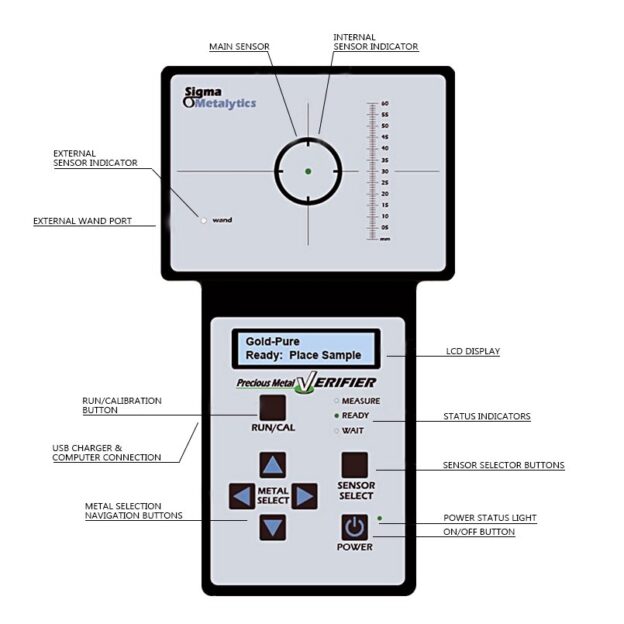
The Sigma Metalytics is a handheld device designed to quickly and accurately measure the purity of precious metals. It’s perfect for both seasoned investors and those new to the world of precious metals. With this handy tool, you can confidently verify the authenticity of your metals, whether you’re buying from a local shop or online.


Precious Metals Purity Verifier with Small and Large Wand – Sigma Metalytics

Click the image above to purchase this product.


Your Pocket-Sized Precious Metal Guardian


The Sigma Metalytics Verifier is designed with user convenience in mind. This compact device is easy to carry, making it perfect for testing metals on the go. Whether you’re at home, a shop, or a trade show, you can confidently check the purity of your precious metals.

Accuracy is essential when dealing with valuable metals. The Sigma Metalytics Verifier excels in providing precise measurements. You can rely on this tool to determine the exact purity of your gold, silver, or other precious metals. This ensures you know the true value of your investment.

Investing in a quality metal tester shouldn’t break the bank. The Sigma Metalytics Verifier offers excellent value for its price. It’s an affordable option for both new and experienced investors.

The Sigma Metalytics Verifier has earned a strong reputation for reliability and is gaining popularity among investors. Its accurate results have made it a preferred choice for many in the precious metals community. By owning this verifier, you’re joining a growing group of investors who prioritize accuracy and trust in their metal investments.


How to Use the Sigma Metalytics Verifier


Using the Sigma Metalytics Verifier to protect your precious metal investment is simple. Just follow these steps:

  1. Power on the device.
  2. Select the appropriate metal type.
  3. Place the metal item on the testing wand.
  4. Read the purity results on the display.


Sigma Metalytics Verifier: Protect Your Precious Metal Investment

Click the image above to purchase this product.


Where to Buy the Sigma Metalytics Verifier


You can purchase the Sigma Metalytics Verifier directly from our website. Visit The Gold Marketplace to learn more and place your order.

Don’t hesitate—acquire your Sigma Metalytics Verifier today and invest with confidence.

Case Studies of Gold As Inflation Hedge

Gold as inflation hedge has historically proven to preserve wealth during periods of economic uncertainty. The U.S. national debt is approaching $35 trillion, and as history shows, inflation can lead to skyrocketing gold prices. Here are four historical examples where inflation led to a significant increase in gold prices.

You may check out this video, too, for more insights.


Understanding the Inflationary Environment


To understand how inflation affects gold, we need to look at what causes prices to go up. Things like the government spending too much money, printing too much cash, problems with getting supplies, and wars can all make prices rise.

Another important thing is how prices, interest rates, and gold are connected. When prices go up quickly, banks often raise interest rates to slow things down. But when this happens, people sometimes buy gold because they think it’s a safer place to put their money than cash.


Four Case Studies: A Historical Perspective


1. The United States 1970s Inflation Crisis


During the 1970s, the United States experienced a period of high inflation driven by rising oil prices and expansionary fiscal policies. The oil embargoes of 1973 and 1979 led to skyrocketing energy prices, contributing to overall inflation.

As inflation soared, investors sought gold as inflation hedge to protect their purchasing power. This led to a significant increase in the price of gold, which reached an all-time high in 1980, peaking at over $800 per ounce in nominal terms. Gold’s performance during this period was marked by its ability to retain value amidst economic instability.


2. Hyperinflation in Wartime Germany (1920s)


In the aftermath of World War I, Germany experienced hyperinflation, with prices doubling every few days at its peak. The Treaty of Versailles imposed heavy reparations on Germany, leading to excessive money printing to meet these obligations.

Amidst this economic turmoil, the German Mark became virtually worthless, forcing people to turn to gold as a tangible store of value. The resulting surge in demand sent gold prices skyrocketing.


3. Zimbabwe Hyperinflation (2000s)


Zimbabwe’s hyperinflationary crisis in the 2000s stands as a stark reminder of the destructive power of uncontrolled inflation. The Zimbabwean dollar’s rapid devaluation eroded people’s savings, prompting a shift towards gold as a more stable asset.

As the Zimbabwean dollar rapidly lost value, citizens turned to alternative stores of wealth, including gold. The price of gold in Zimbabwean dollars soared during this period, providing a measure of stability amid the country’s economic chaos. Gold as inflation hedge demonstrated its effectiveness against extreme inflation.


4. Current Inflation Concerns in the USA


While not yet reaching the extremes of previous examples, the current global economic landscape raises concerns about potential inflationary pressures. Factors such as massive government stimulus packages and supply chain bottlenecks have ignited discussions about inflation’s resurgence.

In recent years, concerns about inflation have resulted in the gold price rising by 177% so far in the USA. Government spending on immigration and wars in Israel and Ukraine have sent the U.S. debt to $35 trillion. Inflationary pressures have been exacerbated by supply chain disruptions and expansive fiscal policies.

Investors responded by increasing their allocation to gold as a hedge against inflationary pressures. The Federal Reserve and global banking institutions have noted that a global economic reset is inevitable, and they are buying gold as rapidly as they can without alerting the masses. Gold’s current performance indicates its continued relevance as an inflation hedge.


Behind the Scenes of the Gold Market


The price of gold is determined by a delicate balance between supply and demand. On the supply side, factors such as gold mining, recycling old gold, and government gold sales influence the amount of gold available. Conversely, demand for gold is driven by various sectors. Jewelry making is a major consumer, followed by technology industries that use gold in their products. Additionally, investors often see gold as a safe haven for their money, especially during times of economic uncertainty. This investment demand significantly impacts gold prices.

Central banks, which are like the big banks for countries, play a crucial role in the gold market. They hold large amounts of gold as a reserve and sometimes buy or sell gold. When central banks buy gold, it usually pushes the price up, while selling can have the opposite effect. Their actions are closely watched by investors and can influence how people feel about gold.

Overall, the gold market is influenced by a complex interplay of factors, including supply, demand, central bank actions, and investor sentiment.


How to Profit from Gold


With historical evidence pointing towards gold’s potential as a hedge against inflation, investors should seriously consider incorporating it into their portfolios. However, diversification remains key. Here’s how including a portion of your assets in gold can benefit you:

Hedge Against Inflation: As inflation erodes the purchasing power of traditional currencies, gold’s historical performance suggests it can retain its value. This helps protect your wealth during inflationary periods.

Portfolio Diversification: Spreading your investments across various asset classes, including gold, can mitigate risk. When some asset classes experience losses, others might perform well, helping to balance your portfolio’s overall performance.

Safe-Haven Asset: During times of economic uncertainty or geopolitical turmoil, gold is often viewed as a safe haven. Its price tends to hold steady or even rise when other markets experience volatility.


Investment Options


Owning physical gold bars or coins offers direct ownership but comes with storage and security considerations. Here are some popular choices:


1.The $10,000 Gold Bullion Package

Introducing the exquisite $10,000 Gold Bullion Package, the perfect investment opportunity for those seeking to diversify their portfolio with a valuable and tangible asset. Indeed, investing in gold is a prudent decision, as it has a proven track record of preserving value and serving as a reliable store of wealth. Consequently, with this package, you can rest assured that your investment is safe and secure, underpinned by the intrinsic value of gold as inflation hedge.

Furthermore, gold bullion bars offer an exceptional avenue to maximize the returns of your investment portfolio. As such, you will receive our carefully selected 1 troy oz gold bar. Notably, our bullion bars adhere to the stringent standards of the International Organization for Standardization (ISO), guaranteeing the highest level of authenticity.


Gold As Inflation Hedge: The $10,000 Gold Bullion Package

Click the image above to purchase this product.


2. Gold World Coin Set


This world coin set is for gold investors that want a little diversity in their portfolio. The set includes 5 of the most popular coins in the world, all of which are IRA eligible. Those 5 gold coins are the American Gold Eagle, the Canadian Gold Maple Leaf, the Austrian Gold Philharmonic, the Australian Gold Kangaroo, and the American Gold Buffalo. 

The set enables the investor to diversify and still buy at a much lower premium than they would if they bough the 5 coins individually.


Gold World Coin Set

Click the image above to purchase this product.


3. 10 gram Gold Bar – Brand Varies


Introducing the magnificent 10-gram Gold Bar, thoughtfully sourced from a selection of esteemed brands and elegantly presented in protective carded packaging. Indeed, crafted from 99.99% pure gold, this bar is a testament to the unwavering commitment of these renowned brands to producing bullion of exceptional quality. Consequently, by choosing a gold bar from one of these reputable brands, you can invest with confidence, knowing that your purchase adheres to the highest industry standards.


Gold As Inflation Hedge: 10 gram Gold Bar

Click the image above to purchase this product.


Remember:


First thing to remember, careful research and understanding your risk tolerance are crucial before making any investment decisions. For the same reason, consider consulting The Gold Marketplace to determine the appropriate allocation of gold within your overall investment strategy. Visit www.thegoldmarketplace.com or call us at 800-960-6280.


Protect Your Wealth from Inflation: Proven Strategies

It’s time to take action to protect your wealth. Are you tired of seeing your hard-earned money shrink in a low-interest savings account? Traditional investments like stocks and bonds can be unpredictable, savings accounts pay little, and inflation erodes your money’s power. Discover how to shield your investments from inflation and economic uncertainty with this blog!

Check out our video, too, to see how some assets can protect your wealth from inflation and economic turmoil.


Is your money losing its worth?


Traditional investments like stocks and bonds have always been seen as reliable ways to protect your wealth.

However, the recent economic ups and downs have shown just how unpredictable they can be. For instance, the stock market experienced significant unpredictability during the COVID-19 pandemic. In March 2020, the S&P 500, a benchmark for U.S. equities, fell by about 34% from its peak in February 2020. Stock prices can fluctuate wildly, as we’ve recently seen.

Savings accounts, which used to be seen as safe and dependable, now provide very low interest rates.

As of mid-2023, the average interest rate for a savings account in the United States was around 0.39%. This rate is a stark contrast to the high inflation rates seen in recent years. For example, the U.S. inflation rate peaked at 9.1% in June 2022, the highest in over four decades.

These returns are so small that they hardly keep up with the rising cost of living.

In this challenging economic environment, it’s essential to explore alternative investment options that can offer better protection against inflation and economic instability. Diversifying your portfolio with tangible assets that have historically proven to retain value, such as precious metals, can provide a more stable financial foundation. These alternatives can help safeguard your wealth from the unpredictable nature of traditional investments and the insufficient returns of savings accounts.


Recession-Proof Yourself


Gold has been a safe haven for wealth for centuries. Unlike stocks and bonds, which can go up and down in value, gold has held its worth over time. It’s like a trusted friend who’s always there for you.

Traditionally, you’d need a big chunk of money to buy gold. But things are changing. Now, you can own a piece of gold without spending a fortune. The 10-gram gold bar is perfect for starting your gold journey. It’s like dipping your toe into the gold pool without taking a giant leap.

Gold is still a top choice for protecting your money.

Owning a 10-gram gold bar is smart because it’s both affordable and valuable. You can start small and buy more later. It’s like building a strong foundation for your financial future. Whether you’re new to investing or a seasoned pro, gold can be a great addition to your money plan.


Your Guide to Buying Gold


At The Gold Marketplace, we offer a curated selection of top-tier precious metals to meet the diverse needs of our clients. Let’s highlight two of our most popular products: Valcambi Suisse and PAMP Fortuna gold bars.


Valcambi Suisse: Purity and Authenticity Guaranteed

Valcambi Suisse is renowned for its commitment to quality and precision. Each 10-gram Valcambi gold bar comes with an enclosed orange assay card, your assurance of authenticity. This card contains vital information such as the bar’s serial number, assayer’s mark, and detailed specifications. It’s a testament to Valcambi’s dedication to transparency and customer trust.

Protect Your Wealth with 10 gram Gold Bar – Valcambi (Carded)

Click here to buy this product.


PAMP Fortuna: Beauty and Investment Combined

For those seeking a touch of elegance alongside their investment, the PAMP Fortuna gold bar is an exquisite choice. This masterpiece features the captivating design of the Roman goddess of fortune, Fortuna, intricately crafted into pure gold. Owning a PAMP Fortuna is not just about investing in precious metal; it’s acquiring a piece of art that symbolizes prosperity and good fortune.

Protect Your Wealth with 10 gram Gold Bar – PAMP Fortuna (Carded)

Click here to buy this product. 


Find the Perfect Precious Metal for You


Whether you’re looking for a hedge against inflation, a long-term investment, or a special gift, The Gold Marketplace has something for everyone.

Call us toll-free at 1-800-960-6280.